(Solution) Level 3 Nuvascare Ltd 3CO03 Core behaviours for people professionals
Solution
Nuvascare Ltd – HR/L&D Assistant Application – Initial Questionnaire
The aim of this questionnaire is for us to get to know more about you. We would like you to respond to five questions, in each case with detailed examples from your previous work experience. (This can be any work experience and does not have to be people practice related. If your work experience so far is limited, you can also consider your experience of studying).
Q1. Ethical working is very important to Nuvascare. Tell us what you understand by the terms ‘ethical principles’ and ‘professional values’ and give us an example of how one of your values has informed your behaviour at work. Make sure you give us the full context of your example (what type of work, what value, how it informed your behaviour). (AC 1.1)
Ethical Principles and Professional Values
As evidence in the CIPD professional map, ethical principles represent the ways of conduct anchored on moral judgement defining right and wrong.
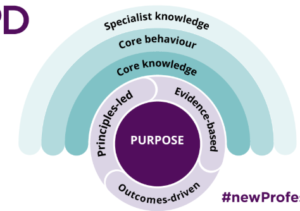
These ethical principles are noted as including the beneficence, non-maleficence, autonomous relations, just and truth. This definition by CIPD (2025) inform the embrace of ethical principles as enhancing practice of discretionary decisions. This is with all the stakeholders working towards these decisions. In Nuvascare for instance, ethical principles would be evidenced by how all colleagues are handled with transparency and dignity with all employees treatment being fair. Conversely, professional values are defined in CIPD (2025a) as main beliefs and ideals guiding different team members of a specific profession in their workplace. Currently, Nuvascare professional values include honest, kind and openness.
Building Respect
Type of work– In year 2024, working in Saudi Armco organisation as a people practice professional, an Employee (XXX) had claimed of discrimination by their seniors wit reports provided as being informed by their age. XXX is an employee of male gender who had been working in Saudi Aramco for the past 24 years.
XXX had claimed that her immediate supervisor (Juliet) was treating him in a different manner comparatively with the rest of the teams who had been regarded as young and fast in executing their functions.
After I candidly engaged XXX, he noted that she has an adequate understanding of all requirements of his job role. As such with Juliet only recently having joined the organisation, he felt that she was not qualified to rate his work as unqualified and not meeting the expected standards.
At the initial phase of the engagement, XXX had shown a sense of anger and called upon the administration to fire Juliet for being discriminatory.
I managed to bring XXX and Juliet in a common negotiation. As a way of ensuring I built mutual respect, XXX employee was able to explain to Juliet how he felt disrespect upon Juliet attempts for micromanaging his working. With XXX being a very senior employee in Saudi Aramco having worked for many years, he felt that Juliet need to respect him and appreciate her knowledge in the workplace.
After a series of discussion with both parties, a mutual agreement was achieved where they ought to develop mutual respect (Your articlelibrary, 2025). This is with Juliet being called upon to respect XXX and avoid any form of discrimination. As a mediator of all parties involved, I managed to develop mutual respect for all.
Importance of the Value at Nuvascare
With Nuvascare currently in an expansion strategy in their market, resolving conflict amongst different parties which touch on ensuring mutual-based respect is important. The Nuvascare employees would be provided with an opportunity for voicing their issues and opinions.
When Nuvascare employees feeling that they are highly respected, they would be in a position of expressing this and working towards what can be accepted with zero feel of likelihood of retaliating. With Nuvascare similarly operating in the highly competitive care department, this would guide appropriate policy works supporting respect-based work environment.
Q2. As a provider of care, we are rigorous about complying with relevant regulation and law. Tell us about two ways you have previously complied with relevant regulation and law in your work or studies within the context of ethics and professional practice. (AC 1.2)
A relevant UK Legislation
In UK, there are different legislations which define active operations of organisations in their labour market (CIPD, 2025b). The purpose of the legislations is defining the relations in workplace and labour market. According to ACAS (2025), the outcome of these legislations is eliminating any misunderstanding or disharmony. In Nuvascare context, recruitment and selection as they intend to expand their operations is supposed to have zero discrimination.
Identified Piece of UK Law/Regulation– An example of a legislation which can be put into account is the Equality Act 2010 (CIPD, 2025c). This UK legislation is informed by the fact that employees should not be discriminated owing to possession of protected characteristics. A summary of the protected characteristics are as illustrated herein;
Figure 1: Summary of the Protected Characteristics
Hence, the employees should not in any way be discriminated in any employment lifecycle stage for possession of protected characteristics. The rationale of this legislation is guaranteeing the employees safety in assumption of legal and moral responsibilities. The inclusion and diversity scope in these organisations is assured (CIPD, 2025).
Two Example of Complying with the Regulations and Laws
Example 1: After my graduation, my first placement was in Riyad Bank. This was immediately after the COVID-19 pandemic had emerged. A recommendation was made by the management and administration to provide opportunities for remote working for their employees. There was a provision for the employees to be supported with IT systems and hardware in order to actively participate in the remote working arrangement.
Nevertheless, for the employees who were disabled, they were not provided with the necessary support for working remotely. Some of the employees needed brail support and hearing aid which were only available for the employees working in the organisation. As a strategy to manage this, I recommended the management to provide the employees with protected characteristics with support in order to be able to execute their functions (Equality Human rights, 2025).
Example 2: Working in Saudi Aramco, there was an instance where during succession planning an employee was considered due to being male despite existing a female in a technical department who could have been considered. The employee was given an opportunity by the virtue that the employee who was to be replaced was of male gender. According to (REF), this was an outright discrimination of the employee due to their gender orientation.
Link to Ethics and Professional Practice
For the first example of failure to facilitate employees disabled with remote working, this is against the ethical value of equality. Also, professionally, all support must be equally provided as evidenced in the ACAS Code of Practice (ACAS Code, 2025). In Nuvascare, as the organisation is expanding, I would ensure that all employees must be adequately supported and facilitated.
In second example, discriminating the employee as they expand to new locations in succession planning, this is against best professional practice in recruitment and selection (Equality Human rights, 2025a). Also, in ethics, working in Nuvascare, there would be a need for ensuring that the organisation recruitment and selection is for common good of all.
Q3. Our people practice team are a happy and inclusive group of people, who respect each other and work well together. The team values are that everyone is willing to:
- contribute their views and opinions
- clarify problems or issues
- work effectively as part of the team.
For this question we would like you to provide three examples (one for each of a, b, c),
summarising how you demonstrated the behaviour. (AC 2.1)
Contributing Views and Opinions
In my placement working in Saudi Aramco as a people practice professional, there was an employee who was not performing as per expectations. This is as evidenced in the Performance Appraisal of employees (CIPD, 2025d).
I started by engaging the management in private to alert them I was following a case of an employee who was not performing as per expectations. Considering the employee had been engaged through succession planning by the management and had worked for long. I presented 3 years performance appraisal results of the employee to the employee and compared data with the employees in other departments. At this point, we engaged the employee who was underperforming in the meeting. All the facts were presented to him and facts shared for best understanding.
The employee was required to explain the situation and reason for failing to perform as expected. Their representation noted the employee had been going through grief. This contributed to the employer underperformance. A recommendation was made after listening to all viewpoints of their facilitation.
Clarifying Problems or Issues
At one point working in Riyad Bank, there were varying opinions and views on gender pay gaps. I actively listened to all the parties to understand the major pay gap in the organisation in specific departments. I engaged the management and administration, employees’ representatives and also the employees (CIPD, 2018). I developed an anonymous survey for understanding the issue of pay gap. The outcome of the survey recommended the need or ethically and transparency in rewards outcomes. Through the survey, all the parties provided their opinions anonymously. I collaborated the findings of the survey as a people professional ensuring Equality Act 2010 were integrated to ensure the issue was well understood.
Through Equality Act 2010 and following the guidance of ACAS Guidelines (CIPD, 2025), the misunderstandings were effectively resolved. This is with a mutual understanding obtained amongst different stakeholders.
Working Effectively as part of a Team
Please click the following icon to access this project in full