(Solution) MKTM028 Strategic Marketing STP Literature Review Report
Solution
Contents
2.0 Segmentation, Targeting, and Positioning. 2
3.0 Application in Industry. 8
3.2 Industry 2: Financial Services Industry. 11
Figure 1: Types of Market Segmentation. 4
Figure 2: Types of Behavioural Segmentation. 5
Figure 3: Market Target Strategies 7
Figure 4: Market Positioning Strategies. 8
Figure 5: Microsoft’s Revenue Trend. 9
Figure 7: PayPal Leading in Online Payment 13
Figure 8: Value Added Services Provided by Visa. 14
1.0 Introduction
Segmentation, Targeting and Positioning (STP) are the basic frameworks of strategic marketing that helps organisations to understand the specific needs of customers and meet them (Bhasin, 2023). In the case of STC Group, Saudi Arabia’s largest telecommunications provider, the effective and strategic application of STP is crucial for the firm in its quest to strengthen its market position and pursue the objectives of Vision 2030. As Saudi Arabia shifts towards a digital economy, it becomes imperative for STC to fulfil the changing and diverse needs of its consumers in this new digital age (ITA, 2024). This report presents a theoretical analysis of STP, the application areas of the frameworks, and actionable insights that could help organisations achieve the best results from STP implementation. The objective of this report is to provide practical recommendations for achieving sustainable competitive advantage, improving customer satisfaction, and accomplishing STC’s mission and vision in an environment of shifting market dynamics based on the analysis of industry best practices and STC’s strategic plans.
2.0 Segmentation, Targeting, and Positioning
The STP marketing model is a prevalent strategic framework in modern marketing. This technique is extensively employed, with marketing leaders recognising its effectiveness to efficient communication practices (Hanlon, 2024). STP marketing prioritises commercial effectiveness by identifying the most profitable market segments for a company and subsequently developing a marketing mix and product positioning strategy customised for each client group.
2.1 Segmentation
Tarver (2024) defines market segmentation as the technique of dividing the large market into smaller groups that have a similar requirement for the same product. It identifies specific customer groups to customise products and branding to appeal to those groups. Markets can be categorised in various manners, including geographic, demographic, or behavioural segmentation (See Figure 1). Market segmentation enables organisations to mitigate risk by identifying which items are most likely to capture a share of a target market and determining the optimal strategies for marketing and delivering those products. By minimising risk and enhancing clarity regarding the marketing and delivery of a product, a corporation can concentrate its resources on the most profitable endeavours.
Market segmentation can enhance a company’s demographic outreach and may assist in identifying previously unconsidered products or services.
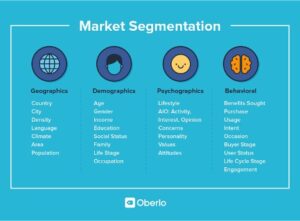
Figure 1: Types of Market Segmentation
Source: Shaw (2019)
For STC Group, segmentation means identifying specific groups of customers that include corporate customers, young professionals, and rural residents to provide customised services. STC uses data analysis and customer segmentation to gain a profound insight into the target audience (STC, 2024b). For instance, the company is able to segment its customer base based on usage with the high data users who engage in activities such as streaming and gaming as well as the cost-conscious consumers who look for value for money deals. Behavioural segmentation (See Figure 2) is also very significant as it helps STC target certain behaviours of customers, for instance, people who frequently travel internationally and need roaming services (Mialki, 2024). This way, STC is able to meet the needs of each segment it targets, therefore enhancing customer satisfaction, and ultimately loyalty.
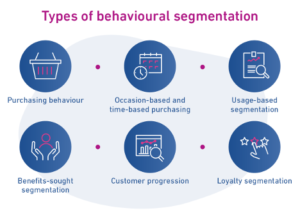
Figure 2: Types of Behavioural Segmentation
Source: Mialki (2024)
As postulated by Tarver (2024), segmentation if well done allows firms to channel their resources in the right direction and thus increase customer loyalty. For instance, the telecom companies are in a better position to incorporate segmentation strategies that factor in the usage divergence since they can develop special promotions and services. For instance, the smart cities need faster broadband connections for their devices, while the villagers require an economical and stable network connection. This allows STC to expand its market and make sure that it is catering to the needs of many customers.
2.2 Targeting
According to Talerico (2023), targeting is the process of identifying certain segments of the market and directing the marketing efforts towards these segments. The market is segmented by age, gender, income, education, lifespan, social position, and social class. Following the identification of segmentation, several segments are chosen to target customers effectively. The market targeting process consists of two steps: the initial stage involves assessing market segmentation and selecting the categories that align with the business objectives (John, 2023). In the subsequent phase, marketers identify suitable market targeting tactics.
An undifferentiated market targeting strategy ignores market segmentation and aims at the entire market. This method considers buyers as a uniform group. This indicates that firms do not produce different items for diverse market segments (Murphy, 2024). This marketing strategy relies on comprehensive distribution and substantial advertising. Companies strive to establish a higher perception of their products in consumers’ minds. STC uses this method to attract a broader audience by addressing shared customer requirements and desires, as opposed to utilising specialised and concentrated strategies.
A differentiated market targeting approach involves an organisation selecting multiple market segments and creating unique and effective marketing mixes for each segment (Mathur, 2022). A differentiated market targeting strategy is anticipated to yield higher revenue compared to an undifferentiated marketing approach. However, the unique marketing mix also results in an increase in promotional expenses. The rising sales must be balanced against escalating costs.
In a concentrated or niche market targeting strategy, resources are dedicated to particular market segments. Prince (2024) explains that concentrated marketing tactics are efficacious for small enterprises with constrained resources. Their concentrated strategy enables superior performance relative to larger enterprises.
Lastly, micromarketing strategy entails creating products, services, and marketing initiatives that align optimally with specific individuals and locales. Small business proprietors might employ a micromarketing strategy to engage clients on a personal level (Twin, 2023).
STC has adopted a differentiated marketing strategy where the company offers distinct products for different segments, including the corporate segment solutions and packages for students and rural population. In this way, STC maintains its position and viability in various markets. STC has a specific targeting strategy that it uses to achieve its business objectives while also considering its social responsibility (STC, 2024a). Technology-driven enterprises and other high-value clients are offered premium services like cloud and IoT connectivity. On the other hand, the low-income population and residents of remote areas receive affordable offers to minimise the digital gap. In the case of STC, focusing on the core segments of the population while extending services to the underserved locations is the model for inclusion.
Figure 3: Market Target Strategies
Source: Pouillard (2023)
2.3 Positioning
As seen in Figure 4, positioning involves the development of an identity that differentiates the brand from the other brands in the eyes of the consumer (CFI, 2023).
Please click the following icon to access this assessment in full
Related to: https://rankedprofessionals.com/downloads/solution-strategic-and-international-management/