(Solution) CIPS Modules 6 Final Project
Solution
Executive Summary
In this business report, it evaluates XXZ organisation in regard to category and contracts management. In particular, this report focuses on identifying recommendations for improvement of category management in project management and cost management for establishing what XXZ organisation need to do for improving their operations. Part of this report include evaluating the process for initiating and planning the implementation of category management, analysing strategic and traditional sourcing approach and aligning the categories with direct and indirect costs. Similarly, this report focusses on evaluating new strategies of optimising supply chain, differentiating contract administration and management and evaluating the risks and risk management strategies in contracts.
To develop the project findings, the data has been sourced by the application of primary and secondary data. Also, various models and tools have been embraced including category management cycle, Mendelow Matrix, SWOT and PESTLE tool. The key findings in this report evidence that XXY successfully achieves risk management in the contract and category management and effective stakeholders relations with modernised technologies integrated. This is with challenges in collaboration and capacity development being noted in pursuing procurement strategies.
From the findings in this report, the different gaps can be managed through the adoption of the following recommendations;
- Embrace use of big data as a new technology strategy for effective decision making
- Improved suppliers performance and long-term relations of different stakeholders
- Proactive adoption of sustainability strategies for conforming with environment policies and practices
- Enhanced capacity development strategies by PS&M teams for successful strategic sourcing and category management
- Embrace of modernised technologies for category management successfully
- Centralising the PS&M strategies for enhancing efficiency and transparency of entire stakeholders
Table of Contents
1.1 Key Terms (Title); Aims and Objectives. 5
2.1 XXZ Organisation Background. 7
2.2 Reason this Business Report Matters; Objectives. 9
3.0 Requirement to initiate and prepare introduction of category management 12
3.1 External Factors Analysis. 12
4.0 Strategic and Conventional Sourcing; Role in Category Management. 15
4.1 Situation, Target and Proposal (STP) 17
5.0 Tools and Techniques for Mapping Categories of Direct & Indirect Expenditures. 18
5.1 Direct and Indirect Expenditures. 18
5.2 Tools and Technique Comparison and Contrasting. 20
5.2.2 Situational Analysis (Kraljic Matrix Analysis Tool) 21
5.2.3 Comparison and Contracting of STEEPLE and Kraljic Matrix Analysis. 23
6.0 Innovative Measures to Improve Supply Chain Networks. 23
6.1 Management of Complexities and Volatilities. 23
6.2 Dynamic Supply Networks. 24
6.4 Automation Implementation. 25
7.0 Contract Administration and Contract Management Strategy. 26
8.0 Risks and Implementation of Management Strategies in Contracts (Case of Category Management) 27
9.0 Conclusion and Recommendations. 30
Figure 1:Different Contract Management Strategy. 6
Figure 2:XYZ Organisation Summary of Operations. 8
Figure 3:XYZ Organisation structure summary. 9
Figure 4:Category and Contract Management Change Areas. 10
Figure 5:Balogun and Hope Model of change acceptance. 11
Figure 6:5 Rights of Procurement in XXZ. 11
Figure 7:Category management cycle. 15
Figure 8:Indirect expenditures summary. 19
Figure 9:Kraljic Matrix Analysis Situational Analysis. 22
Figure 10:Contract administration and management strategies. 27
Figure 11:Summary of the risks and mitigation measures. 28
Table 2:Direct and Indirect Expenditures. 19
Table 3:Summary of STEEPLED Analysis. 20
1.0 Introduction
1.1 Key Terms (Title); Aims and Objectives
Category management strategy is instrumental for improved PS&M strategy in XXZ Procurement and Supply Management (PS&M). According to CIPS (2024), it is also relevant in managing incurred costs of implementation of the overall PS&M roles. For XXZ organisation, part of corporate strategy entail acquiring strong product offering, innovative, meet customer needs rapidly and collaboration strategies expanded. For Qatar outsourcing sector where XXZ is based, as a perfect competition, their role is ensuring an organisation gain in profitability and market dominance. Today, XXZ partner with the office of Managing Director in Headquarter in Europe for enhancing consistency in sourcing in line with existing standards, set support and individualised policies. Nevertheless, the partnership with the headquarter in Europe is not applicable in all their categories of spend. For instance, in the areas of project management and costs management, category managers are involved in reviewing contracts, pursuing negotiation and formalising all documents. The 6 team leads work as legal, teams for approving the process. Hence, through a detailed contract management, XXZ gains in leveraging on competitive advantage. This is in the outsourcing industry in Qatar where they have based on their operations, The contracts are not delayed, ineffective negotiations and complying with the entire process. A summary of the contract management stages is as illustrated in the following;
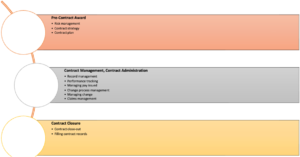
Figure 1:Different Contract Management Strategy
Source: CIPS Module Notes
For the various phases of contract management in XXZ, they manage in achieving continuous contracts management. This is line with the set standard, guideline and internal-based policies. The rationale for this is the effective review of contracts and service level agreement and to master agreement. By embrace of this practice, in the closure of the contract, auditing recommended areas for evaluating roles, communication and notification issued to supply teams and request made.
1.2 Project Scope
As highlighted previously, this report aim is to evaluate category and contract management in XXZ. The different areas of focus in this report would include;
- To manage the current issue of lack of appropriate development initiatives for category management
- Develop the Critical Success Factors (CSF) to be strategic contrary to conventional/traditional sourcing strategy and category management
- Come up with Key Performance Indicators (KPIs) essential to map category of expenditures
- Embracing innovation for improved supply chain networks
- Administrate contracts and contract management distinction noted
- Risks assessment and implement risk management strategies in different contracts
The relevance of evaluating the identified areas is for improving category and contract management for XXZ, lower time delays and managing costs overruns.
Currently, for XXZ organisation, the Information Technology (IT) is the area of spend which does not involve senior managers in Europe Headquarter, this represents an approach for enhancing contracts consistency in tandem with set standard, guideline and policies.
By achieving an improved category management, XXZ would achieve the following;
- Lower delayed contract management contributing to project delaying, costs overruns
- Ineffective negotiation plan and re-evaluate suppliers terms
- Compliance and identifying any ineffective area owing to ineffective performance roles
- Inefficiency in sourcing to be approved and sign workflow
In summary, through a focus on the identified factors, contract management strategies and relations with external environment and suppliers relations would be considered. The most appropriate strategy in improving contract management is put into account with relevant recommendations offered. The focus aspects include managing risks in contract and category management. Through this strategy, a successful organisation contract management is attained.
2.0 Background
2.1 XXZ Organisation Background
XYZ is a Qatar based subsidiary of a multinational organisation which is involved in providing procurement outsourcing services. Their operations are informed by the need for revolutionising the procurement outsourcing. The organisation services include end to end tactical procurement, expediting, delivering the finals goods to client warehouse by involving different buyers, expeditors and subcontracts personnel. The outcome of their services is as summarised in the following;

Figure 2:XYZ Organisation Summary of Operations
Source: XYZ internal data
XYZ is currently a market leader in the oilfield procurement providing effective and efficient alternative to in-house management of procurement for local (Qatar Government firms) and international energy sector. Through a successful integration of global sourcing and management services with appropriate buying power and prompt responses, high-level quality services are provided by the organisation. For XYZ organisation, success in their operations is informed by existence of a strong leadership and management. As evidenced in figure 2, the organisation operates through an elaborate hierarchical structure which define their leadership and management process. A summary of their organisation structure is as illustrated in figure 2;
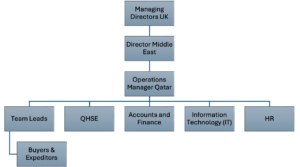
Figure 3:XYZ Organisation structure summary
Source: Summarised from the organisation internal data
2.2 Reason this Business Report Matters; Objectives
In order for XYZ to have their PS&M strategies optimised, contract and category management is essential and need improvement (CIPS, 2023). Hence, this business report will focus on ensuring establishment of an appropriate strategy for success of their PS&M strategy. The Information Technology (IT) is identified as the spend area. Part of this evaluation include extent in which project management and cost management is improved. To support the need for change, various change management strategies as evidenced in the CIPS Module 5 and 6 have been put into account.
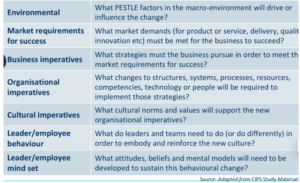
Figure 4:Category and Contract Management Change Areas
Source: CIPS Module Notes
As illustrated in figure 3, for success in change, the areas of target would include environment, market demands, business imperative, organisation and culture. In particular, the target for XXZ being an international subsidiary would the culture acceptance need (CIPS Module Notes). This is supported by Balogun and Hope Model which identify how a change strategy is enhanced. The identified change in context of XXZ would be classified in adaptation and evolution. This provides an appropriate guide for changing all their operations gradually. This is illustrated in the following;
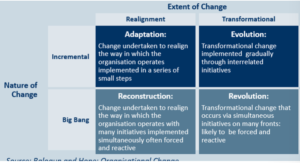
Figure 5:Balogun and Hope Model of change acceptance
Source: CIPS Module Notes
The need for the change process is informed by view that XXZ organisation is characterised with high-level efficiency and on-time decisions made. To achieve this, there is a need of putting into account of the main impact of revenue gained and costs management. This is at the same time making sure the application of conventional PS&M strategy is improved to enhance cost saving and optimised practices. This is in line with the 5 Rights Procurement Model (Utama et al., 2022) which identify need for XXZ to promote stakeholders relations with best suppliers of their IT category being engaged.
Figure 6:5 Rights of Procurement in XXZ
Source: CIPS Module notes
As evidenced in figure 5, success in improving the contract and category management would mean adherence to total quality management (TQM) and improved stakeholders relations. This is with right quantity achieved by fulfilling all purchasing orders of IT systems and managing overall needs of their suppliers. The right place would be achieved by engaging right suppliers in active negotiation in right time. Cumulatively, these strategies would enhance how credible, reliable and potentially embracing innovation as part of change.
3.0 Requirement to initiate and prepare introduction of category management
In XXZ, as an international subsidiary, they are involved in sourcing various products and services in different timelines and conditions. Hence, it is important to put into account of internal and external factors in identifying these requirements (O’brien, 2024).
3.1 External Factors Analysis
In category and contract management, the external factors characterise the necessity for embracing modern technology as part of improving the PS&M strategy of sourcing IT systems. There are a set of factors which influence the success of the process as detailed in the PESTLE Analysis (CIPS, 2023a). The analysis prioritises on the macro-environment factors with direct impact on the change process in XXZ organisation.
Please click the following icon to access this assessment in full
Related;https://rankedprofessionals.com/downloads/solution-module-6-project-programme-and-change-management/