(Solution) New Assessment ID / CIPD_5CO02_24_01 5CO02 Evidence-based practice
Solution
Briefing paper – part one
For part one, you need to provide the graduates with knowledge and understanding of what evidence-based practice is and identify approaches that can be taken for effective critical thinking and decision-making that ensures integrity and value is upheld.
You must ensure that you:
- evaluate the concept of evidence-based practice including how approaches to evidence-based practice can be used to provide insight that supports sound decision-making across a range of people practices and organisational issues. (AC 1.1)
Evidence based practice (EBP) is a structured approach to decision making that integrates critical evaluation of relevant data, organisational context, stakeholder input, and professional expertise to make sound, rational decisions and ultimately achieve better business outcomes (CIPD, 2019).
Evaluation of Evidence Based Practice
EBP practices such as critical thinking and rationale decision making models are very important in HR practice. According to Bergström (2023), critical thinking is the objective evaluation of evidence in order to identify bias, and critically questioning assumptions in order to strengthen the basis for decisions made. On the other hand, Rational decision making offers a logical framework for the systematic evaluation of alternatives for decisions and selecting the best alternative. These methods increase the accuracy and decrease the reliance on guesswork and instils stakeholder trust. However, EBP has its disadvantages. Critical thinking, for example, is time consuming and demands advanced analytical skills which might sometimes not be available. Rational decision making tends to oversimplify complex issues or may completely ignore the qualitative aspects such as employee emotions (Young, 2024). Further, both models depend heavily on the existence and quality of evidence, and poor data can result in flawed conclusions.
Use of EBP for People Practice Issues
Resourcing: Recruitment of specialised aviation professionals is a challenge for Emirates. EBP supports sound decision making through analysis of labour market trends, candidate profiles and performance data (Rousseau, 2020). By using critical thinking, skills and certifications can be evaluated using quantitative metrics, and culture fit using qualitative insights. On the other hand, rational decision making helps to prioritise hiring needs as well as select candidates that fit in the long-term goals.
Learning and Development (L&D): EBP can analyse performance reviews and customer feedback to understand training needs in order to improve cabin crew service quality at Emirates. Training programs are tailored based on evidence, to align with organisational standards (CIPD, 2018). For example, critical thinking assesses the training methods relevance and rational decision making allocates resources effectively on the initiatives that serve to enhance the customer satisfaction and employee performance.
Use of EBP for Organisational Issue
Raising levels of customer satisfaction: In order to enhance customer satisfaction at Emirates, the company aims at closing service delivery gaps. This is supported by EBP which uses passenger feedback, Net Promoter Scores (NPS) and flight operation data to understand customer experience trends (Stuart, 2023). From these sources of evidence, it is possible to identify specific areas in which service improvements could be made, for instance, improving the quality of in-flight entertainment or providing for the needs of specific segments of the population. For example, critical thinking evaluates the actual causes of dissatisfaction by considering the evidence against organisational goals and ensures that recommendations address the actual causes.
- evaluate one appropriate analysis tool and one appropriate analysis method that might be applied by organisations to recognise and diagnose issues, challenges, and opportunities. (AC 1.2)
Analysis Tool
PESTLE analysis is a strategic framework meant to analyse macro environment factors impacting an organisation (Battista, 2024). This tool enables HR professionals to understand the impact of external influences on the way the workforce is structured, business operations, and the way the organisation makes decisions.
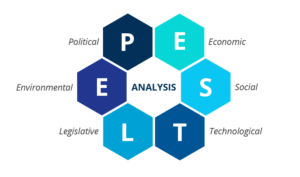
The PESTLE framework is very effective in diagnosing issues, challenges and opportunities by providing a structured approach for examining external factors (Wood, 2024). For instance, PESTLE can be used by Emirates to determine the economic shifts, like the fluctuating oil prices that directly reflect on operating costs as well as workforce planning. Similarly, advancements in technology such as AI integration into the operation can serve as opportunities for efficiency improvements or workforce reskilling. Changes in the legal and regulatory frameworks across Emirates’ global markets can also expose it to compliance risks and, therefore, call for pro-active HR strategies.
One of the strengths of PESTLE is that it is comprehensive, and HR teams are able to identify and consider a range of external factors that may help influence organisational goals. The process is however, time consuming as it applies lots of research and expert input (Alam, 2024). Moreover, the tool only captures a snapshot of the external environment and thus requires continued monitoring in order to remain effective in times of rapidly changing context.
Analysis Method
Exit interviews are qualitative analysis methods conducted with employees leaving the organisation to gain insights concerning their experiences that led them to leave the organisation (Mohdzaini, 2021). This method presents an opportunity to understand how employees perceive the practices and policies, as well as the cultural elements of the organisation.
Exit interviews are very effective at recognising and diagnosing issues, challenges, and opportunities in an organisation. For instance, exit interviews with cabin crew or pilots could show recurring trends such as long working hours, lack of career progression, or inadequate support systems. Such feedback helps HR to find the right patterns and bring targeted interventions, for example modify shift structures or to enhance career advancement opportunities (Indeed, 2024). Additionally, the method highlights opportunities for employee satisfaction, including implementing work-life balance initiatives.
The strength of exit interviews is that they directly present actionable insights from employees so that HR can make knowledgeable decisions to solve various challenges such as retention and engagement challenges (Walker, 2024). Nevertheless, the method may be limited by biases, when departing employees might exaggerate grievances, or fail to be entirely honest.
- explain the main principles of critical thinking including how these might apply to your own and others’ ideas to assist objective and rational debate. (AC 1.3)
Main Principles of Critical Thinking
Critical thinking refers to the ability to think clearly and to evaluate objectively the ideas, opinions, and arguments of others (Howlett & Coburn, 2019). The main principles of critical thinking are clarity, logic, evidence-based reasoning, open mindedness and reflective thinking. Clarity ensures that the ideas presented are well articulated and understood. Logic stresses sound reasoning and a sense of logical connection between ideas. Evidence based reasoning enables a conclusion to be made by considering only credible sources. Lastly, open mindedness helps broaden the scope for exploration to include all perspectives, while the reflective thinking works by promoting self-awareness that helps challenge assumptions and bias hence avoiding rushing into conclusions (CIPD, 2016). When applied together, these principles guarantee that decisions are made rationally, on the basis of proper analysis supported by evidence.
Application of Critical Thinking to Develop My Own Ideas
While designing a training program for Emirates’ cabin crew to enhance customer service excellence, I used critical thinking. First, I defined the program objectives clearly and collected evidence of areas in need of improvement like customer feedback and performance data. I then reviewed several training methodologies to analyse their effectiveness, feasibility, and compatibility with Emirates’ customer experience standards. Finally, I thought about the outcomes of the program and then included feedback from pilot sessions before launching the program. By adopting this systematic approach, the training was specifically targeted to the crew’s needs, and resulted in measurable improvements in service quality.
Application of Critical Thinking When Considering Others’ Ideas
In a debate about launching an AI-based customer query system at Emirates, I applied critical thinking skills to evaluate a colleague’s suggestion. Although their proposal suggested efficiency, I examined their cost projections, considered similar implementations in the aviation industry, and even consulted IT professionals. Next, we then weighed the benefits against the challenges, and I ultimately recommended carrying out a phased rollout plan, with a pilot test to minimise risk. To make the decision practical, evidence based and aligned with Emirates’ operational goals, I evaluated the idea systematically and challenged assumptions.
How the Critical Thinking Approach Assists Rational and Objective Debate
Through critical thinking, discussions are rooted in evidence and logic in support of rational and objective debate (Ryan, 2023). For example, Emirates can use critical thinking in strategic meetings where the ideas are tested on their compatibility with the organisation goals. Critical thinking aims at eliminating emotional bias by addressing the factual data such as passenger satisfaction metrics, operational reports, and industry trends. Gosner (2024) explains that with this approach, stakeholders are able to debate constructively, identify the optimal solutions and make sound decisions that are in line with Emirates’ vision of delivering world class service.
- explain two decision-making processes for achieving effective outcomes. (AC 1.4)
Force Field Analysis
Force Field Analysis is a decision-making tool that identifies the driving and restraining forces acting on a given change or decision. According to Connelly (2023), it entails listing and analysing factors that are pushing for or against a certain outcome to get a clear picture of what is happening. The aim is to reinforce driving forces and minimise restraining ones to ensure successful implementation.
This process can be applied effectively to Emirates when considering major changes such as implementing a new employee performance management system. Possible driving forces may include increasing employee productivity and improving customer service, while possible restraining forces may include resistance to change, difficulty integrating the system or costs. By employing Force Field Analysis, HR professionals are able to visualise these forces and their relative power, so effective outcomes can be achieved. This complete strategy facilitates strategy formulation for increasing drivers of change and reducing constraints (Young, 2024). If HR considers all aspects of the forces and how the forces influence each other, they can come up with a more strategic and actionable plan such that the change or decision the company is trying to make happens with minimum disruptions.
De Bono’s Six Thinking Hats
The De Bono’s Six Thinking Hats is a creative and structured decision-making process that provides a means of looking at problems or decisions from a number of different perspectives (Hancock, 2020). Each metaphorical hat covers a different way of thinking, to make sure the decision-making processes is considered using different perspectives.
This process ensures effective outcomes are achieved by facilitating a well-rounded and thorough discussion. For example, if Emirates were to introduce a new loyalty program for frequent flyers, the White Hat would ensure that decisions are made based on data, like customer preferences and industry trends. The Red Hat would allow the emotional responses to be taken into account, and to ensure customer satisfaction always remains a priority. The Black Hat would look at the potential risks such as a program failure, or dissatisfied customers, while the Yellow Hat would be focused on the long-term impact such as increased customer retention and revenue. The Green Hat would help in creativity and proposing new features, like personalised rewards. The Blue Hat helps maintain the discussion, ensuring all perspectives are covered, resulting in well thought out and balanced decisions. Through this structured approach decisions are not only innovative, but practical and consistent with the organisation’s goals (CIPD, 2020).
- assess how two different ethical perspectives can be used to inform and influence moral decision-making. (AC 1.5)
Utilitarianism
Utilitarianism is an ethical perspective that favours the greatest good for the greatest number of people. According to West (2024), it focuses on judgment of possible outcomes of a decision in order to increase benefits and minimise harm within majority. In organisations, the overall utility of decisions is determined by considering the long-term consequences for stakeholders.
Utilitarianism can inform and influence moral decision-making regarding resource allocation at Emirates. For example, in the context of introducing environmentally friendly technologies into the fleet operations, the utilitarian approach focuses on the effects of the project for the organisation, for its customers and for the entire community. Although costs may be higher initially, reducing emissions is in line with sustainability goals and helps build the airline’s reputation, being beneficial to future generations and the long-term success of the company.
Utilitarianism helps leaders make moral decisions by pragmatically and holistically considering outcomes. Nevertheless, there are limitations in the utilitarianism perspective. The sole focus on majority benefit might overlook minority interests, such as particular employee groups influenced by an operational change (Tardi, 2024). Nonetheless, the theory works provided that fairness and respect are taken into account, ensuring the potential long-term benefits outweighs the temporary shortcomings.
Integrity
Integrity is an ethical perspective which entails valuing honesty, consistency, and upholding moral principles in the face of external pressures. It means to do the right thing, even if it is hard and to be transparent and fair about decision making (Molina, 2024). Integrity-guided leaders put ethical practices first and not shortcuts or expediency.
Integrity can inform and influence moral decision making at Emirates especially when handling sensitive issues, like employee misconduct or customer complaints. For example, if integrity-based decisions are made on a passenger grievance regarding service quality, the complaint will be looked into transparently and fair resolution will be arrived at to the satisfaction of the customer and in the interest of organisational credibility. HR decisions relating to promotions or layoffs, similarly, must abide by the principle of integrity and there must be no favouritism or unfairness.
Integrity in decision making promotes a culture of accountability and trust in the organisation. When this perspective is applied by leaders, it enables them to deal with ethical dilemmas, maintain the consistency in enforcing policies and protects the image of the organisation (CIPD, 2015). However, strictly applying integrity could slow down decision making processes in situations which requires frequent changes since the identification of what is fair can be a lengthy process.
- appraise two different ways organisations measure financial and non-financial performance, providing one example of each. (AC 3.1)
Measuring Financial Performance – Revenue
Revenue is a key measure of financial performance, which reflects the total income of the organisation that comes from its core operations (CFI, 2024). It is calculated as: Net Revenue = (Quantity Sold * Unit Price) – Discounts – Allowances – Returns
Emirates can track revenue from Emirates tickets, cargo services, and in-flight retailing
Please click the following icon to access this assessment in full
Related to:https://rankedprofessionals.com/downloads/solution-cipd-5c002-cipd_5co02_25_01/