(Solution) new CIPD 5C003 Professional behaviours and valuing people
Solution
Q1. As part of her actions to improve systems and procedures at Nexxobyte, Aisha has established monthly on-site Management Team meetings to be attended by her, Kit, you and the three Team Leaders. She would like you to make a short presentation at the first meeting ‘appraising what it means to be a people professional, and some of the ways you can contribute at Nexxobyte.’
Provide a written response covering the points you would include in this presentation.
(AC 1.1)
NOTE: there is no requirement to ‘present’ anything for this question – only to provide a written response.
People Professional and their Value to Nexxobyte
CIPD (2025b) defines a people professional as someone who combines specialist knowledge of people management with the ability to create positive working practices that help both employees and the organisation succeed. At Nexxobyte, the role involves more than handling HR processes. it is about building the foundations for a fair, consistent, and supportive workplace. With the company growing quickly, the value of a people professional lies in introducing structure without stifling innovation. This means developing policies that are consistent across all teams while ensuring employees feel supported in their roles. A people professional also acts as a trusted adviser to leaders, guiding decisions that affect performance and culture (Cassidy, 2024). Eventually, this role helps Nexxobyte keep talented staff, reduce conflict, and maintain an environment where creativity and collaboration can thrive.
Activities of a people professional
At Nexxobyte, the activities of a people professional would focus on creating consistency and fairness across all teams. This would include designing and implementing standard HR policies covering recruitment, training, and employee development, so all staff receive equal opportunities. Supporting the team leaders with management training would also be a priority, giving them the skills to handle people challenges and lead effectively (Cassidy, 2024). Another important activity is ensuring employees have access to learning opportunities, helping them keep pace with the demands of the software industry. Listening to staff concerns and addressing complaints fairly would strengthen trust in the company. Additionally, the people professional would support directors with workforce planning, ensuring the right skills are in place for growth. Their activities would create a more engaged and productive workforce that aligns with Nexxobyte’s ambitions.
Behaviours Expected from a People Professional
The behaviours expected from a people professional go beyond technical knowledge, reflecting how the role is carried out day to day.
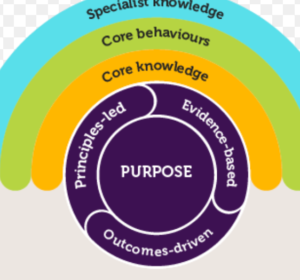
Integrity is essential, ensuring that all actions are transparent, fair, and in line with professional standards. At Nexxobyte, where staff have already experienced inconsistencies, showing impartiality and treating everyone equally will help rebuild trust. Kumar (2025) also mentions that a people professional is expected to be curious and proactive, seeking new ways to improve processes and anticipating challenges before they escalate. Effective communication is another key behaviour. This involves listening to employees, explaining policies clearly, and supporting managers with practical advice. Professional courage is equally important, as the role may require challenging leaders or addressing sensitive issues confidently.
Q2. You are excited by your new role and whilst you can see that there is a lot to do, you feel ready for the challenge.
Discuss two of your personal or ethical values that you believe will help you in your new role, and how consistently applying these will inform your people practice work at Nexxobyte. (AC 1.2)
Fairness
One personal value that I believe will be central to my role at Nexxobyte is fairness. In a workplace where practices have been inconsistent and employees have experienced unequal treatment, consistently applying fairness will help restore confidence in how people are managed (CIPD, 2017). For me, fairness means ensuring that decisions, processes, and opportunities are applied equally, regardless of which team someone belongs to or who their manager is. In practice, this might involve reviewing the current differences in working arrangements and creating transparent policies that remove any perception of favouritism. Fairness also means listening carefully to employees, giving them a chance to voice their concerns, and making sure their perspectives are taken seriously before reaching decisions. Applying this value consistently will help to build trust between staff and leadership, reduce unnecessary conflict, and show employees that Nexxobyte is committed to treating them with respect. In a fast-growing company where change is frequent, fairness can provide a sense of stability and predictability, helping staff feel secure in their roles (CIPD, 2023). Ensuring fairness in all my actions will also help me encourage managers to follow the same standard, contributing to a healthier and more unified organisational culture.
Integrity
Integrity is an ethical value that I believe will guide me strongly in this role. Working in people practice requires trust, and integrity means always acting honestly, responsibly, and with the best interests of both employees and the business in mind (Young, 2020). At Nexxobyte, this will be vital when handling sensitive matters such as employee complaints, conflicts, or performance issues. Staff need to feel confident that what they share will be handled with discretion and fairness, while directors need assurance that advice is based on accurate information and professional judgement rather than personal bias. Consistently applying integrity also means being prepared to raise concerns or challenge behaviours that may not align with good practice, even if those concerns involve senior leaders (Russell, 2023). For example, if informal recruitment processes are leading to inequality, it is my responsibility to highlight this and recommend a more structured approach. Acting with integrity helps create a culture where employees feel respected and supported, and where managers are encouraged to lead responsibly. It also strengthens the credibility of the HR/L&D function as a reliable and ethical partner to the business.
Q3. Aisha has emphasised that she wants you to be a ‘a firm voice for people practice at Nexxobyte’. This means communicating with the management team in an informed, clear and confident way to convince them of the need for change and new ways of working.
Consider why it is important to communicate in this way and two potential consequences (one for you and one for Nexxobyte) if you are unable to do so. (AC 1.3)
Importance of Communicating in an Informed, Clear and Confident Way
Communicating in an informed, clear, and confident way is essential because it builds credibility and trust in the role of people practice at Nexxobyte. The company has grown quickly without formal structures, which means some managers may not see the immediate need for change. If I can present ideas with clarity and evidence, I can help them understand how consistent policies, fair treatment, and structured development benefit both employees and the business. Being confident ensures my contributions are taken seriously and not overlooked, particularly in a company where technical expertise may dominate discussions. According to Peters (2024), this also sets a professional standard, showing that HR/L&D is not just an administrative function but a strategic partner in driving growth. By communicating in this way, I can influence decision-making, align the directors and team leaders around shared goals, and reduce resistance to change. Employees will also benefit indirectly, as clear and consistent communication at the leadership level often translates into fairer and more transparent practices across the workforce. In short, effective communication ensures that my role has a positive impact and that Nexxobyte’s growth is supported by strong people practices rather than hindered by inconsistent management.
Potential Consequences of Failure to Communicate
If I am unable to communicate confidently and clearly with the management team, one consequence for me personally would be a loss of credibility. Without being seen as an informed and authoritative voice, my recommendations could be dismissed or overlooked, leaving me sidelined in important discussions. This could create frustration in my role, limit my ability to make a difference, and damage my professional reputation (CIPD, 2022). Over time, I may even find it difficult to build positive working relationships with managers if they perceive my input as uncertain or lacking in value.
For Nexxobyte, the consequence would be more serious, as the opportunity to introduce effective people practices could be missed. Without consistent HR policies, managers may continue to apply their own ways of working, which has already led to uneven access to learning opportunities, complaints, and staff turnover. If change does not take place, the company risks losing more talented employees and developing a reputation for poor people management. According to CIPD (2025a), this could make recruitment harder and affect the organisation’s ability to deliver on client projects. Therefore, my ability to communicate effectively is directly linked to Nexxobyte’s ability to grow sustainably and maintain a motivated and stable workforce.
Q4. During a conversation with the two administration staff, you learn more about some of the problems there have been at Nexxobyte. Some of these involved unethical behaviour (one manager regularly approving attendance at expensive training events and conferences for his ‘favourite’ team members, whilst consistently refusing similar requests from others) and even some illegal activity (a former employee using Nexxobyte work time and equipment to operate his own separate business).
Explain how, if you had been at Nexxobyte and aware of these two situations when they existed, you would have approached and raised them (AC 1.4)
Addressing Unethical Behaviour
If I found one manager approving training and conference attendance only for his preferred team members at Nexxobyte, I would have approached the issue systematically. Favouritism of this kind is damaging because it creates inequality in access to professional development, reduces trust in leadership, and risks disengaging those who feel excluded (CIPD, 2021). The first step would be to discreetly gather evidence, such as training approval records and employee requests that had been declined. I would then review Nexxobyte’s L&D policies, noting any gaps or unclear processes that allowed such bias to occur. Once I had sufficient evidence, the next step would be to raise the matter directly with the manager concerned in a private, professional conversation to understand their reasoning. If inconsistencies remained unexplained, I would escalate the issue to Aisha and the management team, highlighting how this behaviour undermines fairness and retention. To prevent recurrence, I would recommend clear criteria for approving training requests, transparent tracking of L&D opportunities, and management training on ethical decision-making. Handling the issue in this way would help address the unethical behaviour and promote fairness and accountability across the organisation.
Addressing Illegal Activity
In the case of the former Nexxobyte….
Please click the following icon to access this assessment in full