(Solution) PWC 5HR01: Employment Relationship Management
Solution
Task- Written Answers to Following
1.1 Employee involvement and participation
Employee Involvement
Employees involvement is defined as a process of engagement in making decisions in workplace and practices with management having final say (ACAS, 2021b). As part of involvement, they initiate ideas, suggestion and participating in undertakings involving plans for day-to-day workplace operations. According to (REF), this assists to build relations since staff and management are involved, create appropriate job satisfaction and trust amongst staff and management. For instance, considering the case provided, a well developed suggestion scheme and forums are initiated pertaining to thinking of employees in the post-merger process. The outcome of these strategies are identified in Young (2021) as assisting staff in feeling involved in change strategy, ,less resistance levels and collaboration in workplace upon shifting of leadership.
Employee Participation
This is defined in Lombard (2024) as a strategy where employees are engaged in making final decision contrary to only being involved to offer their input. The participation is more than consultation as part of decision making formally by involvement of trade unions, joint consultative and boards representation. According to (REF), the participation process initiate mutual-based respect, accountable for all and trust amongst staff and management.
Further, the employees participation in making policies and workplace decision surge potential of staff to support organisation objectives and harmonious co-existence. According to (REF), the involvement of work councils is relevant for increasing how the employees are influenced by different policies in place. The outcome of this is the employees having a feel of their voice is being heard and of high-value. The overall uncertainties and sustainability are eliminated with stability and appropriately coordinated work environment (REF).
Differences
The employees involvement and participation are different on basis of decision-making strength and scope of engagement. Contrary to employees involvement guided by management and consultation-based, participation is guided by management offering direct-based influences to make core decisions. As identified in (REF), involvement is basically linked to feedback sourcing by use of questionnaires/engagements with participation having the employees engaged for collective bargaining and negotiating on employees representatives.
Another difference relate to informal and voluntary for employees involvement with the participation inclusive of formal-based structures including trade unions involvement and advisory teams. Sourcing for input of the employees by engagement strategies evidence their involvement with voice offered to make core decisions evidencing an increased participation. Nevertheless, (REF) identify employees participation as being holistic in changes in entities evidencing sustainable stability.
1.2 Union and non-union forms
Unions
The union representation is informed by staff enrolling to trade unions bargaining for the sake of improving workplace condition, remuneration and overall job security (REF). For instance, trade unions could play a critical function linking employers and staff and protection for their collective bargaining needs. According to CIPD (2025b), the scope of inclusion of unions is offering support legally, advocating fairness and facilitate industrial action when need emerge. For example, in an organisation involved in merging, trade unions could be engaged in ensuring that they maintain prevailing legislations including dismissal of employees in an unfair manner or contractual changes disadvantaging a staff. They are able to leverage on collective action meaning an increase in influencing outcome of making decisions. The scope of representation is noted in (REF) to assist in increasing how confident they are for workplace relationships for assurance of fairness during organisations change in their environment.
Non-Union
This represent a communication channel amongst staff for voicing their issues or participating in workplace decision making and with no enrolment to trade unions. For instance, Peters (2020) identify employees forums as core to guide a set of discussions pertaining to challenges in workplaces, placing ideas on how to improve them and interaction actively. In an organisation passing under change process, development of leadership could be facilitated by employees forums for managing job security issues, restructure and set policy in organisations. Through the strategy, (REF) note existence of open-based interaction amongst the management teams and employees, developing trust-based relations which are transparent.
Similarities and Differences
The union and non-union employee representation facilitate employees in expressing their ideas, make relevant suggestion and manage raised issues (REF). This is for making core organisation decision and voicing their input. Also, a facilitation of harmony-based workplace relationship through an encouragement of interactions amongst the staff and administration with all conflicts avoided and having input on employees involvement.
According to CIPD (2024), they are distinct in terms of power and influence. For example, unions are supported by law with collective bargaining rights allowing active negotiations for employment and pursuing industrial actions such as strikes based on need. This is different from non-union representation informed by voluntary interaction amongst management with limited legal implementation.
Additionally, the unions imply escalation of dispute by formal-based negotiations and industry-based actions with non-union strategies working by use of open-based interactions and managing their goodwill in resolving issues in work. According to ACAS (2022), the outcome entail ability to limit how they shape employment process.
1.3 Employee voice and organisation performance
Adopting the definition in Broderick (2024), employee voice enhance performance through an increased engagement, innovativeness and performance. Employees have a likelihood of commitment and experiencing immense job satisfaction scope when they have a feeling of being listened contributing to increased retention. According to (REF), for a public sector case with employees input increasing efficiency, staff involved lead to improving efficiencies and delivering services.
Further, Busher (2019) hypothesise that employee voice has a positive implication in facilitating active decision making, offering insights to management from leading employees with direct relationship with other users. For instance, to ensure employees voice guide identification of issues in integration, enable leadership for addressing overall issues prior their escalation (Ranjan & Jhaveri, 2025). Finally, the employees voice when done in a effectively structured forums and representation imply transparent relations, trust-based and team work hence organisation effectiveness and stable.
Arguments
Despite employee voice appreciation, their impact on performance is not assured or appropriate. According to Wilson (2024), for business environment under consistent change, detailed consultation lead to reduced decision making and hence inefficient. Failure to adequately manage this contribute to increased conflicts as opposed to cohesive teams considering varying opinions could create tensed environment amongst the staff and leaders. In a different report by Muller-Heyndyk (2024), organisations possessing inappropriate leadership could encounter challenges in managing staff feedback leading to frustrated and lowly engaged individuals. Failure of integrating staff feedback in meaningfulness by the leaders lead to employees doubting on its success. As evidenced in CIPD (2025a), this result to lost trust and morale for the entire organisation.
Judgement
The employee voice and organisation performance has a direct link informed by strengths and limitations. For instance, a holistic employee voice contribute to an increased engagement, in of attractiveness and trust-based relations. All these factors lead to an increase in performance in organisations. Conversely, according to ACAS (2020), inappropriate management or increased consultations contribute to frustrated teams affecting how they make decisions.
A case example is an organisation going through a merging process which could embrace a highly structured employee voice including joint consultation committees allowing a coordinated strategy of obtaining feedback from staff with zero disruption of operations. At the end, it is dependent on how leaders are committed towards achievement of employee voice and capacity for acting on two-way feedback provided meaningfully.
1.4 Better working lives
Better Working Lives– This is defined y CIPD (2020a) as inclusive of development of appropriate working environments enhancing staff well-being scope, how they are engaged and individual growth. The main focus is to ensure staff are respectfully managed, support obtained and empowerment for achieving a success in professional and personal fonts. The outcome of this is to create a business sector encouraging work-life balances, fair-based operations and development strategies. The better working lives is identified in ACAS (2023) as driving improved job satisfaction, lower stress levels and good staff retention improving the entire organisation success.
Ways of Designing Better Working Lives
Work-Life Balance Strategies– The core strategy to design appropriate working lives entail promoting work-life balance assisting stress levels reduction and ensuring satisfaction of staff.
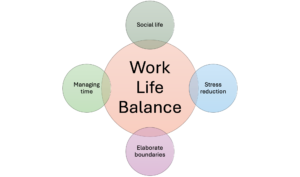
According to (REF), the flexible working arrangements such as remote-based work, flexibility in hours of working and compressing working weeks guides balanced personalised and professional-based commitment. The outcome of this is noted in Suff (2019) to increase staff wellbeing through their positioning in management of work life balance. Further, having initiatives for wellness including mental health facilitation, managing entire stress isues and enrolling to gym sessions increase overall work-life balance. Organisations prioritising on flexible working and their employees wellbeing end up possessing immense engagement and retention scope. According to (REF), this is owing to the provided support process and employees empowerment for executing their roles in optimum without sacrificing themselves individually.
Regular Reviews of Workload– This is a strategy which is used to create better working lives by regularly reviewing if assigned workload for employees is real and easily managed (REF). Employees who are overburdened could contribute to increasing burnouts, reduced satisfaction in job roles and immense turnover. Hence, a continuous analysis of workload in organisations is important ensuring they represent staff capability and overall wellbeing. As evidenced in (REF), this entail having clear job specification, SMART targets set and open-based interaction on challenging workloads done.
As evidenced in Peters (2022), the responsibility of the management is to be engaged actively with teams for identifying immense pressures in place with management of all tasks and requirements appropriately. In the entities which continuously review staff workload gain increased engagement and morale as they have a feeling of their workplace recognising wellbeing scope. An appropriately organised workload enhance performance, reduce stress-levels improving overall work-life balance for staff (REF). This lead to appropriate and sustainability in workplace.
2.1 Organisational conflict and misbehaviour
Definition
Organisation Conflict–
Please click the following icon to access this assessment in full
Related to: https://rankedprofessionals.com/downloads/solution-5hr01-prime-ld-employment-relationship-management/