(Solution) Strategic & International Management
Executive Summary
This report provides a strategic and international management analysis of Saudi Aramco, the world’s largest integrated energy and chemicals company. The study begins by reviewing Aramco’s current Vision and Mission statements, recommending minor adjustments to reflect its growing emphasis on sustainability and global diversification. An internal analysis reveals Aramco’s key strengths, including its unrivalled oil reserves, strong financial performance, and advanced technological capabilities, while identifying weaknesses such as overdependence on crude oil revenues and exposure to geopolitical risks.
A market map is created to illustrate Aramco’s diverse customer segments and geographic markets, followed by an external analysis of the Asian market, a region critical to Aramco’s growth. Using PESTEL and Porter’s Five Forces, the report identifies trends such as energy transition pressures and regional competition.
Furthermore, key recommendations are proposed based on the key findings of the report;
- Accelerate investment in renewable energy projects, particularly in solar and hydrogen, to reduce overdependence on crude oil revenues and align with global energy transition trends.
- Expand joint ventures and strategic alliances with Asian refineries, petrochemical firms, and technology companies to secure long-term market access and enhance downstream integration.
- Develop more robust geopolitical risk frameworks and supply chain contingency plans, particularly in politically sensitive regions, to safeguard operational continuity.
- Invest in advanced digital technologies such as AI-driven supply chain management and predictive maintenance across its Asian facilities to improve operational efficiency, lower costs, and enhance the company’s ability to respond swiftly to market disruptions.
Contents
2.0 Vision and Mission Statement of Saudi Aramco. 5
3.0 Saudi Aramco’s Internal Analysis 5
4.0 Saudi Aramco’s Current Market Map. 10
4.3 Product and Service Categories. 12
5.1 Porter’s Five Forces Analysis. 12
6.0 Strategic Priority for Aramco’s Asian Market 15
6.1 SWOT Analysis for Aramco’s Asian Market 16
Figure 1: Core Business Areas of Saudi Aramco. 4
Figure 2: An illustration of Saudi Aramco as the world’s biggest oil producer 7
Figure 3: Aramco’s net income (FY 2019-2022) 8
Figure 4: Aramco’s Sources of Revenue. 9
Figure 5: Saudi Aramco Current Market map. 10
Figure 6: Porter’s Five Forces Analysis. 13
Figure 7: A SWOT Analysis for the Aramco’s Asian Market 16
Table 1: Saudi Aramco’s Internal Analysis. 6
Table 2: PESTLE Analysis for Aramco’s Asian Market 15
1.0 Introduction
This report presents a strategic and international management analysis of Saudi Aramco, the world’s largest integrated energy and chemicals company. Headquartered in Dhahran, Saudi Arabia, Aramco operates across a wide range of markets and industries, with a core business in the exploration, production, refining, and distribution of petroleum and petrochemical products summarised in Figure 1.
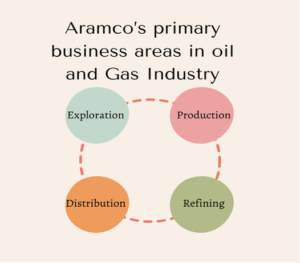
Figure 1: Core Business Areas of Saudi Aramco
Source: Aramco (2025)
In recent years, the company has increasingly focused on energy transition and diversifying its portfolio beyond hydrocarbons to remain competitive in a rapidly changing global market (Aramco, 2025).
The scope of this report includes a review of Aramco’s current Vision and Mission statements, offering recommendations where necessary to reflect the organisation’s evolving priorities. An internal analysis is conducted to identify key strengths and weaknesses that shape Aramco’s strategic position. Additionally, a comprehensive market map outlines the various customer segments and geographic markets served by Aramco’s existing products and services.
Focusing on the Asian market, one of Aramco’s largest and most strategically important regions, the report performs an external analysis using PESTEL and Porter’s Five Forces frameworks to identify key trends, opportunities, and threats. Finally, based on these findings, strategic priorities and actionable recommendations are proposed to enhance Aramco’s competitive position and long-term resilience in the global energy sector.
2.0 Vision and Mission Statement of Saudi Aramco
Saudi Aramco’s corporate purpose and long-term strategy are guided by its Vision and Mission statements, which outline the company’s ambitions and operational values. The current Vision statement reads: “To be the world’s leading integrated energy and chemicals company, operating in a safe, sustainable, and reliable manner.” Meanwhile, its Mission statement states: “Delivering reliable energy and chemical products that drive global commerce and enhance the lives of people around the world.” Both statements clearly reflect Aramco’s position as a global energy leader, with a focus on operational excellence, reliability, and contributing to economic progress through energy supply (Saudi Aramco, 2025). They emphasise safety and sustainability, although these are presented in a relatively broad context, primarily connected to existing hydrocarbon operations.
However, considering the global shift toward renewable energy, digital transformation, and environmentally responsible practices, it would be valuable for Aramco to revise its Vision and Mission statements to more directly reflect these emerging priorities (Doumon, 2024). While the current statements remain relevant, they do not explicitly address Aramco’s role in advancing alternative energy solutions or its commitment to global sustainability goals. Incorporating these themes would strengthen the company’s brand and align its identity with market expectations.
3.0 Saudi Aramco’s Internal Analysis
Blackmore (2024) defines internal analysis as the process of examining several internal elements of the business, such as its resources, assets, and processes, both tangible and intangible. In this case, we shall conduct an internal analysis to define Saudi Aramco’s strengths and weaknesses. The results of our analysis are presented below;
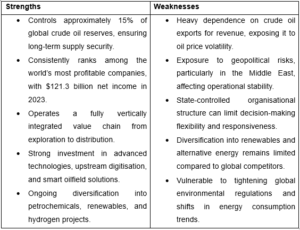
Table 1: Saudi Aramco’s Internal Analysis
Summarised from Aramco (2025)
From this analysis, one of Aramco’s greatest strengths is its unrivalled access to some of the largest proven oil reserves in the world (Shastri, 2023). Being the world’s biggest oil producer, the company controls approximately 15% of global crude oil reserves, giving it a significant advantage in securing long-term energy supply as illustrated in Figure 2;
Figure 2: An illustration of Saudi Aramco as the world’s biggest oil producer
Source: McCarthy & Richter (2013)
This extensive reserve base allows Aramco to maintain production flexibility and meet fluctuating market demands with ease.
Additionally, the company consistently ranks among the most profitable corporations globally (Gnana, 2022). In 2022, Aramco reported a net income of $161 billion, making it one of the highest-earning businesses worldwide (See Figure 3).
Figure 3: Aramco’s net income (FY 2019-2022)
Source: Reuters (2023)
This strong financial performance provides the capital necessary for investment in new technologies, infrastructure, and diversification projects.
Another notable strength is Aramco’s vertically integrated operations. The company controls every stage of its value chain, from exploration and production to refining, distribution, and marketing. According to Kordyukova (2019), this integration ensures cost efficiencies, operational control, and the ability to quickly adapt to market shifts. Furthermore, Aramco has made significant investments in advanced technologies, including upstream digitisation, predictive maintenance, and smart oilfield solutions. Its innovation-driven approach enhances operational efficiency and reduces production costs, reinforcing its global leadership position (Al-Tahini, 2024). The company has also begun diversifying into renewables, petrochemicals, and hydrogen projects, aligning its operations with global energy transition trends.
Despite these strengths, several weaknesses present challenges for Aramco’s long-term resilience. The most significant weakness is its heavy dependence on crude oil exports for revenue generation (See Figure 4).
Figure 4: Aramco’s Sources of Revenue
Source: Barnett et al. (2016)
Although diversification initiatives are underway, hydrocarbons still account for the majority of its income, leaving the company exposed to oil price volatility and global demand fluctuations (Barnett et al., 2016). This dependence is particularly risky as governments worldwide tighten environmental regulations and shift towards renewable energy sources.
Another area of concern is Aramco’s exposure to geopolitical risks, particularly in the Middle East. Being based in a politically sensitive region, the company faces potential threats from regional conflicts, international sanctions, and trade disputes (Tenreiro, 2019). For instance, in 2019, Aramco’s facilities in Abqaiq and Khurais were targeted by drone attacks, temporarily halving the company’s oil production. Although operations were quickly restored, such incidents highlight the vulnerabilities of operating in geopolitically unstable environments.
Additionally, Aramco’s organisational structure has traditionally been state-controlled, which can restrict decision-making flexibility and slow the implementation of strategic changes (Aramco, 2023). While partial privatisation through its 2019 IPO has increased transparency and market engagement, state ownership still heavily influences the company’s operational and financial strategies.
In summary, Saudi Aramco’s strengths include its vast resource base, exceptional profitability, vertical integration, and technological capabilities. These factors secure its position as a global industry leader. However, weaknesses such as overdependence on crude oil revenues, geopolitical risks, and structural rigidity pose strategic challenges.
4.0 Saudi Aramco’s Current Market Map
Figure 5: Saudi Aramco Current Market map
Source: Summarised from Aramco (2025)
4.1 Geographic Markets
Saudi Aramco’s operations span multiple global markets, with key regions including Asia, Europe, North America, and the Middle East. Asia is Aramco’s largest and most strategically important market, accounting for over 70% of its crude oil exports (Sheridan, 2023). Major clients in this region include China, Japan, South Korea, and India, driven by their substantial demand for energy resources and petrochemical products. In Europe, Aramco supplies crude oil, refined products, and chemicals to major refineries and distributors, especially in countries like the Netherlands, France, and the United Kingdom.
In North America, the company operates through wholly-owned subsidiaries and joint ventures, notably Motiva Enterprises in the United States, the largest refinery in North America. The Middle East remains a vital market not only as Aramco’s home base but also as a growing hub for petrochemicals and energy exports to neighbouring countries (Hadchity, 2024). The company is expanding its presence in emerging markets such as Southeast Asia and Africa, leveraging demand growth for fuel, industrial chemicals, and power generation.
4.2 Customer Segments
Aramco’s core customer groups include national governments, oil refining companies, industrial manufacturers, power generation companies, chemical and petrochemical producers, and fuel distributors. Governments and national oil companies are significant clients, purchasing crude oil and refined petroleum products under long-term contracts for domestic consumption and re-export (Rashid, 2023). Industrial manufacturers and energy producers use Aramco’s products for power generation, transportation, and manufacturing processes, including plastics, fertilisers, and industrial chemicals. Additionally, the company serves fuel retailers and distributors through its refined products, lubricants, and specialty chemicals divisions. Aramco also markets directly to end consumers through its subsidiary, Saudi Aramco Retail, providing automotive fuels, lubricants, and convenience services (Aramco, 2018).
4.3 Product and Service Categories
Aramco’s primary offerings include crude oil, natural gas, refined petroleum products (jet fuel, gasoline, diesel), petrochemicals, lubricants, and specialty chemicals (Aramco, 2025). It also invests in renewables, carbon management, and hydrogen solutions as part of its long-term sustainability strategy. These products and services are tailored to meet the specific needs of each market segment and geography, securing Aramco’s position as a leading global energy supplier.
5.0 External Analysis
Asia represents one of the most critical market spaces for Saudi Aramco, accounting for a significant portion of its crude oil and petrochemical exports (Bloomberg, 2022). Countries such as China, Japan, South Korea, and India rely heavily on energy imports to fuel their industries and economies. An external analysis using the PESTEL framework and Porter’s Five Forces reveals several trends shaping the competitive environment and operational priorities for Saudi Aramco in this region.
5.1 Porter’s Five Forces Analysis
Porter’s Five Forces is a strategic tool used to analyse an industry, in order to determine its competitiveness (Gratton, 2025). This is illustrated in Figure 6;
Figure 6: Porter’s Five Forces Analysis
Source: Gratton (2025)
For Aramco’s Asian market, the five forces are as follows:
Competitive Rivalry: The Asian market is highly competitive, with major international oil companies such as ExxonMobil, Shell, BP, and Chevron competing alongside national oil companies like China National Petroleum Corporation and Indian Oil (Herberg, 2019). Price competition is intense, especially during periods of fluctuating oil prices. Additionally, downstream integration and joint ventures between Asian governments and local refineries heighten competitive pressures for market share.
Threat of New Entrants: The threat of new entrants is minimal due to substantial barriers such as enormous capital requirements, access to upstream resources, and strict regulatory controls (CFI, 2023). Establishing supply networks and customer relationships in Asia’s energy market demands significant financial resources, advanced technology, and long-term trade agreements, all of which discourage new players from entering.
Bargaining Power of Suppliers: The bargaining power of suppliers is low in this market. As one of the world’s largest oil producers, Saudi Aramco itself acts as a dominant supplier in this market. The company benefits from control over upstream resources and possesses strong pricing and supply chain advantages (Al-Naimi, 2024). The limited number of comparable suppliers strengthens Aramco’s negotiating position, especially for long-term crude oil supply contracts.
Bargaining Power of Buyers: Major buyers in Asia, including governments and large national oil companies, hold considerable bargaining power due to bulk purchasing and multiple supply alternatives (Thompson, 2020). Buyers leverage this power to negotiate better prices, flexible contract terms, and value-added services, particularly as countries seek to diversify their energy mix and reduce dependency on single suppliers.
Threat of Substitutes: The threat of new substitutes in Asian market is medium to high. Substitutes such as renewable energy, and electric vehicles are increasingly viable options in Asia. While oil remains essential, growing investments in sustainable energy solutions gradually elevate this threat.