(Solution) Oakwood International 5C003- Professional Behaviours and Valuing People
Solution
Table of Contents
1.1 Appraisal of meaning of people professional 2
People Professional Definition. 2
Benefits of PP behaving in line with CIPD professional standards. 2
PP contribution to Nexxobyte. 3
1.2 Personal and Ethical Values 3
Personal Value: Accountability. 3
1.3 Importance of communication and potential consequences 4
Benefits of informed, clear and confident way of communication. 4
Potential Consequences of lack of informed, clear and confident communication. 5
Addressing Unethical Behaviour: Favouritism in Attendance Approval 5
Illegal Activity: Misusing company’s work time and equipment. 6
2.1 Benefits of people feeling included, valued, and fairly treated at work. 6
2.2 Ensuring initiatives are fair and inclusive. 7
Steps to ensure fairness and inclusivity. 7
Checking Inclusivity of Initiative. 8
Task Two: Professional Review.. 8
2.3 Involved and feedback informing review.. 8
3.1 Developments and implications for professional development. 9
Developments in the people practitioner role. 9
Implications for my professional development 9
3.2 Current strengths, weaknesses and development areas 10
3.3 Development activities in the next six months. 10
Task One: Case Study
1.1 Appraisal of meaning of people professional
People Professional Definition
A people professional refers to a person who uses specialist knowledge, ethical principles and evidence-based practice to support and develop people in an organisation (CIPD, 2025). They become instrumental in harmonizing the management of the workforce to the business goals, with fairness, inclusion and continuous development.
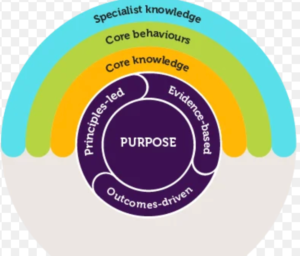
Professional standards guide people professionals in their task to influence organisational culture, improve the ability of employees and facilitate engagement. They act in a strategic manner and they have an impact on decision-making that enhances individual and organisational performance. Simply put, a people professional serves the interests of employees and the business, making people practices ethical, effective, and forward-thinking.
Benefits of PP behaving in line with CIPD professional standards
The need to adhere to CIPD professional standards is imperative in people professionals because it generates credibility, promotes trust, and ethical behaviour that remains consistent. In this case, the Ethical Practice standard stipulates that people professional must exercise integrity and fairness in making decisions (Russell, 2023). Through modeling transparency and impartiality, I can assist Nexxobyte to resolve the problem of inconsistent management practices by ensuring that all groups adhere to equitable policies on recruitment, learning, and performance. This will boost the trust of employees and minimise grievances.
The standard of Working Inclusively encourages teamwork, respect, and diversity. Implementing this in Nexxobyte will entail establishment of unified policies and team-building frameworks where all employees have equal opportunities for example in training and development (CIPD, 2023). I can coach and run workshops on inclusive management practices to the team leaders to enhance consistency and team engagement. Nexxobyte will create a more professional and fair working environment by connecting people management with CIPD standards. This will boost retention, collaboration, and enable managers to become confident, competent leaders in tune with organisational values.
PP contribution to Nexxobyte
The contribution of a people professional to Nexxobyte is immense because it ensures that the people strategies are aligned with the business growth objectives. I will be able to change the inconsistent management through ethical leadership, structured procedures and inclusive practices so as to create a cohesive culture that advocates fairness and accountability. Using professional standards will enhance employee morale, retention, and leadership trust (Cassidy, 2024). Further, helping managers with formal learning and performance models will lead to enhancement of leadership skills and organisational productivity. The value of a people professional in the end is to sustain growth based on people-oriented strategies that could ensure that it meets the balance between the needs of both employees and Nexxobyte strategic ambitions.
1.2 Personal and Ethical Values
Personal Value: Accountability
One of my personal values that I strongly identify with and which will go a long way in determining my effectiveness at Nexxobyte is accountability. Lombard (2025) explains that it implies an ownership of my actions, fulfilling obligations and being responsible not only for success, but also in areas to improve. The promotion of accountability in a workplace that has been characterized by inconsistency of procedures will help in establishing the culture of reliability and professional responsibility. For example, I shall ensure that the Human Resources (HR) activities such as recruitment, training and policy formulation are done in a transparent manner and also in terms of effectiveness. I will hold myself accountable that is, review performance periodically and motivate managers and employees to do the same. Through accountability, I will be able to assist team leaders to see the value of consistency in making decisions and sticking to agreed standards. It also implies being open to feedback and taking corrective action upon error rather than passing the blame. The consistent application of accountability will encourage a sense of ownership throughout Nexxobyte, with managers and staff having the feeling that they can own their responsibilities (Young, 2024).
Ethical Value: Respect
One of the ethical values that will determine my interactions with the individuals at all levels in Nexxobyte is respect. It is about the appreciation of each individual and their views, experiences, and contributions and creating an inclusive environment in which every individual feel listened to and valued (Deer, 2020). As the company has three teams working at the moment, with different management approaches, respect will be used as a means of filling the communication gaps and supporting unity. I will make sure that I interact with the directors, managers and engineers in an empathetic and professional manner. For example, in handling employee complaints, I will listen attentively to everyone involved, and no voice will be disrespected during decision making. The aspect of respect will also influence my people practices development because the policies that will be designed will address varied needs and encourage a work-life balance. Modelling respectful behaviour will promote a similar approach in managers and improve cooperation and conflict minimisation. The consistent application of respect will subsequently build on the relationships at work, high morale, and the positive organisational culture based on mutual understanding and professional integrity (McCartney, 2020).
1.3 Importance of communication and potential consequences
Benefits of informed, clear and confident way of communication
To influence decision-making and earn the trust of senior leaders and managers, a people professional at Nexxobyte should be able to communicate in an informed, clear, and confident way. Since the company is unstructured and inconsistent in the use of management practices, Peters (2020) mentions that effective communication guarantees that improvement recommendations are received, backed up, and successfully implemented. Being well-informed, I would be in a position to give evidence-based arguments in my proposal of new HR policies, including standardising the recruitment and learning processes, to make the management team see the business advantages of consistency and fairness. Confident communication shows professional authority and creates trust, which makes HR a strategic partner and not an administrative role. This strategy encourages team work and with this approach people initiatives are aligned with organisational objectives. Clarity also helps avoid miscommunication and enhances transparency, which is essential in a rapidly developing and changing company (Pecoraro, 2024). Ethical practice is also supported by effective communication where employees are treated with fairness and where decisions are made in an upright manner.
Potential Consequences of lack of informed, clear and confident communication
Failure to communicate in an informed, clear and confident way may lead to adverse personal and organisational consequences. In my case, as a people professional, any ambiguous or unconvincing communication can harm my credibility and persuasiveness in Nexxobyte (Crane, 2025). The management team may view me as being inexperienced or unsure, which may restrict my capability to influence the HR strategy or make a significant change. This may cause frustration, less professional development, and inability to build trust with the important stakeholders.
In the case of Nexxobyte, the failure of the HR team in being able to communicate effectively may cause further inefficiency in the company because managers may not be able to clearly see or embrace the importance of integrated processes. In the absence of clear guidelines, lack of fair treatment, unequal access to learning opportunities, and staff dissatisfaction can continue to grow, leading to increasing turnover and a damaged reputation (Duncan, 2024). In addition, when decisions are made without proper HR understanding, the outcome may be unethical or legally unsafe practices, and there is a greater chance of complaints or tribunal lawsuits. Failure to communicate effectively would also not only reduce the perceived value of the people profession but also affect the capability of Nexxobyte to develop a fair, engaged and high-performance workforce.
1.4 Unethical behaviours
Addressing Unethical Behaviour: Favouritism in Attendance Approval
Had I been in Nexxobyte when the manager was only granting training to selected personnel in the team, I would have handled the matter in a formal and professional manner. To start with, I would collect the necessary evidence, including training approval documents and employee feedback, so that my interpretation of the situation would be reasonable and objective. I would then ask to hold a secret meeting with the said manager to talk about the observed inconsistencies and push them to elaborate on how they made the decisions. In this conversation, I would remind them that the organisation is committed to fairness, equal opportunity, and ethical behaviour with reference to CIPD Ethical Practice standard (CIPD, 2024). In case the behaviour by the manager seemed intentional or persistent following feedback, I would escalate the issue to the directors and provide written evidence in an objective, non-judgmental manner. To ensure that it does not happen again, I would advise that a clear policy on learning and development should be developed which includes clear criteria by which a particular course will be approved. I would also recommend management training on ethical decision making and equal opportunity principles to strengthen the environment of integrity and accountability throughout Nexxobyte.
Illegal Activity: Misusing company’s work time and equipment
If I learned that a Nexxobyte employee was utilising the company time and equipment in their personal business, I would have taken it as a critical issue of misconduct. The first thing I would do would be to check the facts discreetly by consulting the company records, IT logs, or colleague reports in order to preserve confidentiality and objectivity. After confirmation, I would instantly inform the directors because any misappropriation of company resources is a disciplinary and a legal matter. We would then together commence formal investigation in accordance with the disciplinary policy of Nexxobyte, whereby the accused employee is accorded a chance to provide a response to the allegations before an impartial hearing. I would ensure that I remain professional throughout the process and never prejudge, as this would be against fairness and due process. In case the evidence proved misconduct, I would advise taking disciplinary measures as per Acas (2024), which might involve dismissal depending on the severity. After the resolution, I would revise existing IT and conduct policies, making sure that they explicitly forbid personal business use in the workplace and include a description of consequences in the event of such violations.
2.1 Benefits of people feeling included, valued, and fairly treated at work
Human Benefits….
Please click the following icon to access this project in full
Related to: https://rankedprofessionals.com/downloads/solution-cipd-5co03-assessment-id-cipd_5co03_24_01/