(Solution) 5HR02 ImportantParcel Case Study
Solution
AC 1.1 Strategic Positioning in Competitive Labour Markets
Current Labour Market Challenges
Competitors in the parcel delivery industry and those in the broader labour market have made it increasingly difficult for ImportantParcel to attract and retain staff. These new and existing competitors raise the parcel delivery firm’s need to enhance its strategic attention to its employer proposition.
Building a Strong Employer Brand
Development of a compelling employer brand represents one of the most effective strategies ImportantParcel can adopt. Chhabra & Sharma (2021) define employer branding as the image and perception of the brand about its workplace environment, values, and culture. To its advantage, ImportantParcel draws upon its national presence and longstanding reputation as a stable employer and, therefore, a trusted customer and valued employee, branded as a strong attribute.
Enhancing the Employee Value Proposition (EVP)
ImportantParcel can enhance its positioning in the labour market by further refining its employee value proposition. A well-defined EVP encompasses offerings such as career development initiatives, well-being support, flexible working arrangements, and recognition and reward frameworks. Minchington (2022) claims that strong EVPs in use lead to reduced turnover and heightened employee engagement in organisations. Establishing a positive workplace culture that fosters inclusion and advancement will position ImportantParcel to outshine newer, less established competitors.
Using Competitor Intelligence for Strategic Advantage
Competitor analysis is an equally useful resource. ImportantParcel can stay competitive in the market by monitoring the other delivery firms and logistics providers in regard to their approach to payroll, benefits, scheduling, and flexibility. As noted by Boxall and Purcell (2021), staying ahead of labour market trends is important for organisational sustainability as well as effective recruitment.
Demonstrating Social Responsibility and Community Engagement
Aligning with wider social values is equally important. These days, employees are increasingly opting to work for companies that are committed to sustainability and have community engagement initiatives. ImportantParcel can improve its social reputation by integrating green delivery options in its logistics, which in turn improves its recruitment and retention (CIPD, 2023a).
Leveraging Digital Tools and Innovation
As highlighted by CIPD (2023b), digital tools and recruitment analytics are beneficial for more purposeful and systematic recruitment. ImportantParcel can better refine its hiring processes and target its ideal candidates using these tools.
AC 1.2 Impact of Changing Labour Market Conditions on Resourcing Decisions at ImportantParcel
Understanding Labour Market Conditions
Different factors influence the way an organisation plans its staffing and resourcing strategies. These factors either fall under a ‘tight’ scenario, where the demand for labour is higher than the supply, or a ‘loose’ scenario, where the supply of job seekers is higher than the demand. With ImportantParcel, the prevailing labour market issues are based around having an attractive and retaining a stable workforce.
Tight Labour Market and Its Impact
The current ImportantParcel situation exemplifies an organisation struggling under a ‘Tight Labour market. This is where firms find it difficult to fill open positions because of a lack of appropriate applicants. This supply scarcity could arise from a combination of low unemployment, a rise in demand for logistics services, or both. According to CIPD (2023a), under such conditions, firms are generally required to pay more, enhance benefits, modify working conditions, or improve organisational policies. These changes are positive for ImportantParcel and, therefore, could entail paying more than the market, allowing increased flexibility, four-day work weeks, and expedited promotional opportunities.
Additionally, tight markets incentivise investment in upskilling and internal development to minimise external hiring. Internal talent mobility becomes critical in times of scarcity as “aiding employees to transition to new roles to maximise their longstanding organisational value ensures that capable individuals are not lost during development” (Green, 2021).
Loose Labour Market and Its Impact
In a loose labour market, the level of employment outstrips the number of available jobs. This enhances the industrialists’ criteria and serves to curb expenditures on hiring. For ImportantParcel, a loose labour market may widen access to entry-level delivery roles, enabling the organisation to improve its hiring standards and rigorously streamline selection.
The major hazard of a loose labour market talent overhang in an organisation. This phenomenon often leads to employees losing interest in their jobs and roles, driven by a mismatch between their aspirations and the duties they are assigned. “While recruitment may be simpler during these times, there is a risk in retaining talent as their employee value propositions are often taken for granted” (Taylor & Woodhams, 2020).
Adapting Resourcing Strategies at ImportantParcel
To support agility, ImportantParcel requires access to labour market intelligence and moves proactively to anticipate shifts. These shifts. In tight labour markets, focus should be placed on retention, talent branding, internal talent pipelines, and development. These priorities are reversed in loose markets, where attention can be placed on streamlined selection, agile onboarding, and workforce optimisation.
AC 2.1 Impact of Effective Workforce Planning
Understanding Workforce Planning
Workforce management is a systematic process that guarantees an organisation’s personnel are aligned in accordance with its strategic roles and organised hierarchy to effectively achieve its goals. The CIPD (2023a) defines it—which further corroborates this claim—as alignment of an organisation’s strategy with workforce capabilities by analysing labour demand, supply, and identifying workforce gaps.
Benefits of Workforce Planning for ImportantParcel
Forecasting Labour Demand and Supply
ImportantParcel is capable of off-season and in-season staffing based upon business activity trends, demand fluctuations, and growth initiatives. Moreover, this allows for the automation of recruitment and training, which is especially vital during busy delivery seasons such as holidays, preventing unreliable last-minute hires.
Reducing the Costs of Reactive Hiring
Emergent recruitment and costly temporary staffing solutions heavily rely on rigid, minimally adaptable workforce strategies. Rothwell (2021) suggests that, in these cases, organisations with a planned approach to skill gaps are able to rely on self-created talent pipelines through internal training, which fosters employee retention.
Supporting Succession and Talent Development
ImportantParcel stands to gain from workforce planning as it helps identify internal talent poised for advancement. This enables the organisation to devise structured developmental pathways for future leaders and essential roles, thereby improving continuity and employee engagement.
Enhancing Diversity and Inclusion
Through demographic evaluation, workforce planning directly supports more inclusive hiring. ImportantParcel can leverage this information to bridge gaps in representation and tailored outreach while fulfilling its corporate social responsibility objectives.
Challenges of Implementing Workforce Planning at ImportantParcel
Limited Workforce Data and Analytics Capability
Because workforce planning is an entirely new concept for ImportantParcel, accurate HR data stands as a significant roadblock. The absence of comprehensive records on employee attrition, competencies, or demographic information will likely undermine precision in baseline estimates (CIPD, 2023a).
Cultural Resistance from Leadership
Implementing a more formalised planning technique may challenge executive leaders who prefer a more ad hoc, stimulus-response style of decision-making. As noted by Boxall and Purcell (2021), this is often attributed to a lack of awareness about the benefits or fears of disrupting familiar, entrenched processes.
Lack of Managerial Skills and Training
As a result of inadequate preparation, a good number of middle-level managers will not be able to engage in strategic planning. Many of them will be unable to evaluate skill gaps or associate human resource needs with tasks, thus diminishing the quality and value of information they offer.
AC 2.2 Evaluating Techniques to Support Workforce Planning
As ImportantParcel aims to implement workforce planning for the first time, it becomes critical to employ a method that assists in making strategic resourcing decisions. Forecasting and planning can be aided using two popular techniques: managerial judgement and critical incident analysis.
Technique 1: Managerial Judgement
Managerial judgement relies on the insights and experiences of both line and senior managers to project future staffing requirements. Managers at ImportantParcel understand operational trends, seasonal variability, and specific role challenges, which makes this technique advantageous. In the case of ImportantParcel, as noted by Taylor and Woodhams (2020), helpful managerial insight tends to be beneficial in circumstances where formal historical data is absent or unreliable, which has been the case for the company, as it did not previously engage in formal workforce planning.
This method is flexible and economical because it does not require any systems or advanced analytics. In planning meetings, managers can provide qualitative input, which is an asset in rapid operational environments such as logistics and delivery services. On the flip side, managerial judgement can be vague, subjective, and vary between individuals. Forecasts may be based on personal motivation, rather than solid objective evidence, which can lead to flawed predictions. Underestimation of future oversights during periods of growth or change, may be attributed to strategic foresight stagnation. The lack of standardised processes in judgement-based forecasting, as noted by Rees and Smith (2021), can impact the trustworthiness of the workforce plans. While providing invaluable insight from the frontline, managerial judgement works best in conjunction with advanced and data-driven techniques with a blend of evidence and intuition. In data-poor environments, this approach can be the starting point during planning, but it should not be the only method used.
Technique 2: Critical Incident Analysis
In order to find trends and possible hazards, critical incident analysis (CIA) entails examining particular historical occurrences, such as delivery errors, employee shortages, or consumer complaints. This approach can assist ImportantParcel in identifying the underlying causes of workforce-related issues, enabling focused responses like adjusting schedules or hiring more people before busy times.
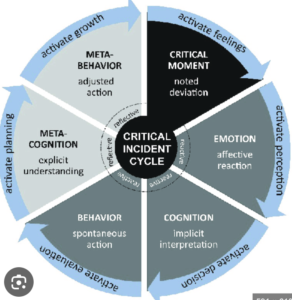
The CIA method advocates learning from errors and supports the development of contingency plans. Reflective techniques, as noted by Armstrong and Taylor (2023), can inform plans by transforming negative events into strategic opportunities. A key drawback of the CIA is its reactive focus. This approach centres only on past events and completely overlooks the proactive forecasting of future workforce requirements. Furthermore, CIA demands meticulous record-keeping and a culture of reporting and transparency, which may not yet exist at ImportantParcel. As a supplementary method, CIA is very useful for exposing gaps in workforce planning and enhancing planning resilience, though forecasting techniques are essential for a comprehensive proactive perspective.
AC 2.3 Evaluation of Recruitment and Selection Methods
Recruitment Methods
1. Social Media Recruitment:
Please click the following icon to access this project in full