(Solution) 5C001 different roles in the People Team at Artiron Motors could support employees on early careers programmes through any three stages of the employee lifecycle (AC 3.1)
Solution
Employee lifecycle- This entails a set of stages from attraction to the time an employee leaves an organisation. It is identified in Gladka et al. (2024) as attraction, recruitment, onboarding, retention and separation.
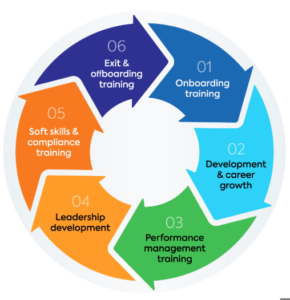
During attraction, employer brand is used for appealing best talents. This is to engage qualified employees informed by organisation needs.
Onboarding is used to ensure employees acclimatise to their new organisations.
Development is an ongoing phase guided by the employees’ learning needs and organisation set objectives.
Retention is a set of initiatives put in place for guaranteeing commitment and satisfaction of the employees to remain for long in their organisations.
Finally, an organisation willingly or unwillingly leaves their organisation. According to Wandhe (2025), this is by being terminated, retire, resign or terminate.
Roles in Recruitment
In this phase, for achieving early careers programmes, people practice professionals enhance fairness and inclusivity in recruitment by embrace of job analysis, well-structured interview sessions and assessments for selecting best employees for the function (Abbasi et al., 2022). By collaborating with recruitment teams, they enhance alignment of recruitment strategies with an adequate workforce plans and ensuring resourcing comply with legislations in place for early careers programmes. Additionally, people professionals enhance employer branding input for attracting different talent pools in early careers programmes.
Roles in Development
People practice professionals are involved in designing L&D initiatives, coaching and mentorship sessions and career progress for improving upskilling process for the early careers programmes. According to Gladka et al. (2024), by appraisals and feedback strategies, performance management is enhanced in the early careers programmes.
Roles in Separation
For this final phase, it entails people professionals managing exit interviews successfully after early careers programmes. According to Wandhe (2025), this is while ensuring effective termination from policy point of view and managing offboarding strategy in early careers programmes. A successful facilitation of transferring of knowledge is enhanced, lowering turnover issues and provision of career-based transition supporting outplacement process in the early careers programmes. An embrace of appropriate structure and ethical requirements assure employees leaving an entity appropriate image as they leave post early careers programmes.
Please click the following icon to access this assessment in full