Solution
(Solution) Article: The Dangers of Recruiting for Cultural Fit
PART A
1. Article: The Dangers of Recruiting for Cultural Fit
i) Compare and contrast ways of determining company culture.
Company culture is determined by a blend of structured analysis and real-world observations. The first approach is top-down assessment, in which leadership defines cultural values and what behaviour is expected. However, the article highlights that company culture as perceived by senior management often differs from the actual lived experience of employees (Bashford, 2018). This gap can end up creating aspirational statements, rather than an accurate portrayal of workplace norms. To respond to this, organisations can undertake employee driven assessment to solicit opinions from different levels of staff. Organisations need to analyse how employees describe their work environment to get a clearer view of cultural realities.
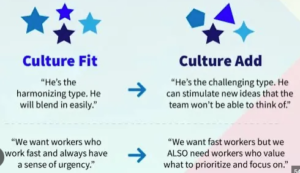
The second strategy is to focus on behavioural analysis, where companies analyse decision-making patterns, internal communication and daily interactions, in order to identify cultural norms. This is opposed to the more formal form of cultural audits which often measures the alignment between company values and workplace behaviour through surveys and data analysis. The article suggests that culture is a dynamic system rather than a static one and is influenced by employee experiences (Bashford, 2018). This is in line with the idea of microcultures, where organisations acknowledge that individual teams or departments can develop special cultural traits within the wider corporate culture.
Further, organisations may apply psychometric testing to determine how employees show cultural behaviours. However, the article cautions against relying on vague cultural definitions that could eventually result in biases and exclusivity. Instead, firms should articulate specific, measurable behaviours that reflect their values (Bashford, 2018). Companies also need to have external consistency, meaning their job advertisements should be aligned with the actual company culture because misalignment often leads to unrealistic expectations from the candidate. Structured approaches can provide measurable insights while informal methods like observing workplace interactions and employee engagement levels offer valuable context. An authentic company culture can be accurately defined by a balanced approach that blends leadership insights, employee feedback, and behavioural analysis.
ii) Describe recruitment methods to determine a candidate
Recruitment methods to find a candidate’s fit within an organisation must surpass subjective impressions. Structured interviews are presented as an essential method for ensuring objectivity. Unlike unstructured interviews where personal biases have an impact on decision, structured interviews assess individual based on standardised questions which are based on behavioural aspects relevant to company culture (Bashford, 2018). For example, Vodafone combines structured interviews, psychometric testing and AI matching tools to ensure that hiring decisions are based on measurable factors and not personal preferences.
In addition, recruiters rely on psychometric assessments to capture candidates that naturally display the behaviours that align with the company’s culture. The article mentions that companies such as Thomson International support uses these assessments to objectively assess a candidate’s suitability for the role (Bashford, 2018). Also, behavioural assessments, including scenario-based exercises, provide useful insight into how candidates respond to real world workplace challenges. Without a rigorous approach, the article warns that organisations are likely to choose to rely on vague criteria and thus forms a process that judges candidates based on how similar they are to the existing employees rather than on how they can uniquely contribute to the organisation’s success.
The article also recommends recruitment panels as another method. These panels consist of multiple interviewers, which lowers the individual bias (Bashford, 2018). For instance, the article notes that while structured process exists, individual hiring managers may override them in favour of personal preferences. Having HR still involved throughout the process acts as a moderating influence to prevent biases from making their way into the final decision. Lastly, the article mentions about the significance of realistic job previews. By being transparent about the challenges of the workplace, candidates can self-select out of roles they may not thrive. This article talks about Metro Bank’s take in which hiring managers clearly articulate the realities of the position to guarantee that there is a match between what people expect and what actually occurs in the organisation.
iii) Explain ways that bias may creep into the recruitment process
This article outlines several ways bias can creep into recruitment often in subtle unintended ways. A major concern is that cultural fit can be a gateway for bias. Cultural fit can become a reason to hire people similar to current employees instead of those who offer diverse viewpoints, if left undefined. The article cautions that relying on a vague notion of “fit” excludes candidates who do not conform to existing norms (Bashford, 2018). As a result, this can lead to cloning, where organisations repeatedly hire people with similar backgrounds and experiences.
The other way mentioned in the article is when a recruiter….
Please click the following icon to access this assessment in full
Related to: https://rankedprofessionals.com/downloads/solution-mktm028-strategic-marketing-stp-literature-review-report/