(Solution) Assessment ID / CIPD_5HR01_26_01 5HR01 Employment relationship management
Solution
Table of Contents
1.1 Employee involvement and participation differences. 2
1.2 Union and non-union employee representation. 3
1.3 Relationship between employee voice and organisational performance. 4
2.1 Organisational conflict and misbehaviour. 7
2.2 Emerging trends in types of conflicts and industrial sanctions. 8
Increased Personalised Disputes. 8
Shifting towards short-term based strikes. 9
2.3 Conciliation, mediation and arbitration. 10
3.1 Principles of legislations for unfair dismissal 11
3.2 Causes of employees grievances. 12
3.3 Importance of handling grievances effectively. 14
Answer to the Questions
1.1 Employee involvement and participation differences
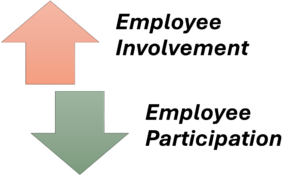
Employee Involvement– In an organisation, management can be actively engaged in informing, consulting and engaging staff on their issues. According to CIPD (2025a), with management guiding the process, ultimate decision is reserved with them. In AnchorBridge for example the annual voice survey, EDI networks, whistleblowing hotline and suggestion schemes are appropriate examples. They are relevant for promoting how they communicate, committed and roles execution amidst controlling the entire process.
Employee Participation– This is defined by Ullrich et al. (2023) as a process where staff and involved reps possess significant input in final decisions by influencing. For example, in AnchorBridge, they have “The Bridge” used as a work council involving the employees and representatives. Their relations are more formalised and appropriate structure characterised with statutory and collective agreements. In AnchorBridge, the scope of employee’s participation is on organisation operations and making core decisions impacting employees, health and safety and policies (Ercantan & Eyupoglu, 2022).
Therefore, the priority of employee involvement is to engage employees and listen to their voice. Participation is largely linked with sharing the decision outcomes reflecting how the powers are shared amongst the managers and staff.
Building Relationships
In AnchorBridge, with relationship issues already in place such as dissatisfaction with 3% pay increase, employees in cleaning team taking home products and also the increased sickness absenteeism.
Through employee’s involvement, Bhakuni (2023) note that they would be guided to act in a transparent manner through presenting information and consultation on these decisions influencing their roles in the different channels of communication. The uncertainties in Jim and Tola relations would also be successfully managed. By management of uncertainties, trust to each other would be enhanced. Also, by employee’s involvement in ‘different channels of communication”, their insights would feel they are appreciated despite the managers mandated with the ultimate decision. This feeling eventually builds a team of committed and motivated employees.
For the employee’s participation, the employees are granted with an opportunity for influencing them. For example, “The Bridge” involve employees and management representatives in AnchorBridge hence building a partner-based work relations which enhance discretionary behaviours. This platform which enhances decision making mutually appreciate organisation issues and employees. This is with collaboration enhanced for success in AnchorBridge offering facilities services in public and private sector.
In collaboration, the involvement and participation are core for harmonious workplace relations. This is from the channels of communication developed, voice appreciated and active negotiations. For AnchorBridge, having issues raised in “The Bridge), they are essential for guaranteeing continuous relationships in their operations. This is with institution-based trust developed legitimising management input in the people policies and procedures guaranteeing inclusivity.
1.2 Union and non-union employee representation
The union forms of employee’s representation example being Trade Union is involved in representing staff interest/expectations in areas of rewards, workplace policies, hours to work, security of tenure and features of workplace. According to Simms (2023), in UK context, trade unions are structured supported by Trade Union and Labour Relations (Consolidation) Act of 992. As identified in the Legislation.GO.UK (1992), the scope of involvement of the trade unions is engaging employers in areas of bargaining, consulting and negotiating on best workplace.
The non-union representation example being work council (The Bridge) grant an opportunity for the employees consulting and engaging with their management/employer representatives. Similarly, according to Naveed et al. (2025), in context of UK their working is voluntary, and operations are guided under the legislation of Statutory Information and Consultation referencing to Consultation of Employees Regulations. Different from the union forms, the non-union forms are not involved in collective bargain or any strike/industrial-action and are primarily to share insights, consult and cooperate.
Further, for union form (trade unions), an earlier-phase effective consultations assists in managing process of organisation change in an effective manner. Any form of resisting is lowered and collective disputes handling. According to CIPD (2025b), unions have an input on fair practice where any policy of performance management, discrimination or redundancies are consistent and legal. The non-Union (the Bridge) have lower level of adversity wit collaboration in employee’s representation enhanced. As identified in ACAS (2021), the bridge is a form of internal strategy fostering active relations and sharing strategy for managing problems. The Bridge would nevertheless have significant power in AnchorBridge as the trade unions would have for the 3% pay increase and sickness absenteeism issues.
In AnchorBridge, trade unions would be best suited to handle the identified issues of 3% expected pay increase for trust-based relations and partnering. The trade unions would be essential for facilitating active engagement, adhere to public sector demands and stable and appropriate relationships in schools, universities and hospitals where they offer their services. The Non-Union Representation however would be core to enhance harmonious relations between Jim and Tola and also manage the issues of disharmony as they progress with their work.
1.3 Relationship between employee voice and organisational performance
Employee Voice– This is defined in CIPD (2025c) is a process of facilitating…
Please click the following icon to access this assessment in full