(Solution) Avado 7C002 AC 2.4 Evaluating the case for introducing channels and processes to enhance employee voice at Homestead
Solution
CIPD (2024) defines employee voice as the mechanisms through which employees communicate their views, influence decisions and contribute to organisational improvement. At Homestead, employee voice is virtually non-existent. There are no formal channels such as staff forums, surveys or representation systems to capture workforce opinions. The organisational culture is described as being aggressive with little concern for employee welfare or engagement. Store managers make unilateral decisions without much HR oversight and casual staff have little job security and no way to voice concerns. As a result, the communication is top-down and employees have little involvement in forming operational or people-related decisions.
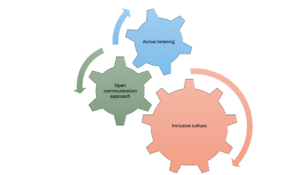
Business Case for Enhancing Employee Voice at Homestead
From an organisational perspective, there are clear potential benefit to strengthening employee voice at Homestead, especially as it relates to the high turnover, absenteeism and poor customer experience. Badru et al. (2024) associate effective voice mechanisms with enhanced retention and performance, much of which is due to the trust and mutual respect that employees and management personalities have for each other. However, critics claim that poorly designed voice systems can actually increase work by increasing expectations for participation without decreasing job demands (Liu et al., 2022). In high-pressure retail environments like Homestead, employees can view voice initiatives as “extra work” instead of empowerment, especially if there is no visible change as a result of feedback.
The Job Demands-Resources (JD-R) model is a useful model for examining this risk. Homestead’s current environment is characterised by high demands such as long hours, unpredictable scheduling, and limited autonomy combined with low resources such as managerial support and job security. According to Koroglu & Ozmen (2021), if voice mechanisms are introduced without solving these imbalances, their use can add to the emotional strain instead of decreasing it. For instance, asking staff for their thoughts or to fill out questionnaires without removing the pressures of workload may only add to stress and cynicism. Therefore, for voice to have a business value, it has to be a resource that does genuinely ease demands, such as enhancing staffing levels or making expectations clearer, not another burden of performance.
Despite these risks, well-designed voice systems have the ability to serve as a form of early warning mechanism to prevent escalation of grievances and legal dispute. At present, Homestead depends on untrained store managers to deal with employee issues informally, making it more likely for practices to be inconsistent and for employment law to be violated. Structured channels like consultation forums or grievance procedures can bring out issues earlier on, allowing for prevention (Donaghey et al., 2022). However, this benefit relies heavily on managerial capability. Without investment in training of managers and HR oversight, formal voice channels may only exist on paper, with little actual protection and frustration among employees (Deepa & Baral, 2021).
Employee Case for Enhancing Employee Voice at Homestead
From the employee side, improved voice channels can have the potential to boost psychological wellbeing, dignity, and fairness. Homestead’s workforce, which is mainly part-time and temporary, is presently facing insecurity, low recognition, and intense work. According to Zhu et al. (2022), voice mechanisms like regular team briefings or anonymous reporting tools may allow employees to express their concerns about workload, scheduling and safety without fear negative consequences. This falls in line with Hirschman’s “Exit, Voice and Loyalty” framework, which shows the high level of turnover at Homestead as rational behaviour due to a lack of voice (James and John 2021).
Psychological safety theory provides additional evidence in support of the employee case. Psychological safety is the understanding that people can express themselves without fear of negative consequences (Sherf et al., 2021). In the aggressive culture of Homestead, the level of psychological safety is low, which means employees will know even when formal voice mechanisms are introduced. This presents a critical problem of implementation, one
Please click the following icon to access this assessment in full