(Solution) Avado 7C002 AC 3.1 Examine the merits of the way in which people practice activities are organised and structured at Homestead
Solution
Centralised HR Administration
One of the strengths of Homestead’s current HR arrangement is the centralised administration function that provides homogeneity and compliance in core people management processes. The HR and payroll function has a centralized function for key functions such as recruitment advertising, contract issuance, and pay administration to ensure consistency across 224 stores. According to Patrucco et al. (2020), the advantages of centralisation are administrative efficiency, cost control and standardisation of documentation of employment as important in a large, geographically dispersed retail organisation. These centralisations are instrumental for competitive organisation operations in their business environment. All the resources are instrumental for advancing approrpaite HR administration functions.
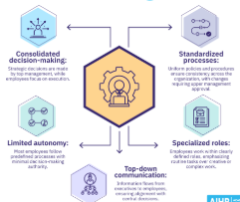
The model supports operational efficiency, through the streamlining of transactional HR processes and economies of scale. According to Claude (2024), administrative expertise continues to be an important HR activity since it helps to protect the organization from legal dangers by ensuring proper documentation and compliance with policies. Homestead’s system allows all employees to be on similar terms and conditions ensuring the compliance with statutory requirements, such as minimum wage, hours worked, and holiday entitlements (Haque, 2023).
However, Goel & Rahulamathavan (2024) argue that although centralisation is favourable in terms of ensuring compliance and cost efficiency, it also restricts the visibility and responsiveness of HR at store level. Employees can perceive HR to be distant or not relevant to them, resulting in disconnection between policy and practice. A disconnected policies and practices imply that they would not achieve their business outcomes effectively.
Operational Empowerment of Store Managers
A second strength of Homestead’s existing HR approach is that the store managers are able to deal with day-to-day people management problems. Delegation of HR functions like recruitment, scheduling and performance management can help accelerate decision making and response time to local operational needs (Maley et al., 2024). In a fast-paced retail setting with varied staffing needs this autonomy means that managers are free to act quickly without having to wait for central HR intervention.
Empowering line managers can also encourage accountability and leadership development. Line managers can also be empowered to create accountability and leadership growth. Ghlichlee & Bayat (2020) noted that employee engagement and customer satisfaction are a direct result of effective people management by front-line managers. Store managers at Homestead have practical exposure to the basic HR functions as a result of their involvement in recruitment and performance management techniques, which could make them more effective managers.
This decentralised model will also help to mitigate bottlenecks and enhance service continuity, especially in a retail setting where flexibility of staff is key to meet customer demand (Ohrling et al., 2021). Store managers are closest to the action and are therefore in a position to make contextually relevant people decisions based on insight into their local labour market and customer patterns.
However, this merit is being compromised by the lack of formal HR training for the managers, which has resulted in inconsistent implementation of employment policies and occasional conflicts. While autonomy does allow for agility, Kahl et al. (2023) also state that it increases the risks of bias and procedural errors.
Cost Efficiency and Strategic Alignment
The third strength of Homestead’s HR structure is cost-effectiveness and a match with the company’s low-cost business model. By keeping the HR function lean and focused on critical administrative tasks, the organisation keeps overhead costs to a minimum, which is directly aligned with the company’s mission of providing affordable home products. As Zirar et al. (2020) pointed out, a model based on this structure is the only one in which HR is an enabler of the commercial priorities, rather than an expensive strategic function isolated from the business.
HR efficiency is a key to Homestead’s ability to allocate more resources to competitive pricing and expansion strategies. The lack of HR representatives in each branch store means that salary and travel funds associated with a decentralized HR team do not exist (Mohamed et al., 2022). Moreover, since the store managers are also able to lead their own teams, the company may not need dedicated human resource employees to manage the process, thereby reducing operating costs even more.
From a business perspective, this model allows HR to maintain the position of a transactional service centre for scalability as Homestead expands in the domestic and international markets. By standardizing HR processes like contracts and payroll systems, consistency can be built, and replicating into new markets can be made easier (Abubakre et al., 2020).
Though cost efficiency is consistent with Homestead’s business objectives, it is associated with significant risks to people outcomes of employee engagement and retention. The over-reliance on transactional HR is likely to be counterproductive to workforce stability and service quality when the organization grows (Mondal & Samaddar, 2021). This means that Homestead must add people who are strategic to their HR system and have an HR strategy that is more focus on people to be successful, while also being financially efficient.
Mitigating the risks associated with devolving HR responsibilities to store managers
To minimise the risks of HR devolution to store managers, Homestead should embrace a hybrid model of HR where there is centralised control with locally based HR support and capability development. It is important to include specific people management training for all store
Please click the following icon to access this assessment in full