(Solution) New Brief 7C002 People Management and Development Strategies for Performance
Solution
Question 1 (AC 1.1)- To what extent do you agree with the view that it is a mistake for people management specialists to distance themselves from administrative activity in favour of strategic work (Word Count: 1,011 Words)
People management has experienced substantial shifts in its field practises through the course of the past several decades. The profession began as an administrative field which carried out duties including payroll processing and compliance tracking and record-keeping yet the profession has evolved into a strategic organisational partnership (CIPD, 2023). Human Resource Management emerged as organisations recognised how people position as their primary competitive weapon. A complete separation between strategic focus and administrative work would create a mistake because these elements fundamentally benefit each other. People management specialists should achieve equilibrium between strategic and operational functions instead of perceiving these aspects as conflicting domains. The strategic method delivers both operational effectiveness and organisational goal adherence.
Strategic people management relocation seeks to enhance organisational worth through workforce planning and talent development and succession planning and high-performance culture development (CIPD, 2024). The activities serve as fundamental requirements for contemporary business operations within fast-changing complicated business environments. Strategic people management demands the organisation to match HR practises with long-term objectives which creates a flexible employee group that stays dedicated to fulfil upcoming business requirements. Retaining capable HR professionals can anticipate skill deficits with workforce analytic tools to identify engagement patterns which enables them to shape organisational transformations. At Google the People Operations team applies worker feedback along with data analytics to enhance decisions such as flexible work rules and leadership training through their data-driven approach (Verduyn, 2024). The activities differ significantly from traditional administrative work that used to define this field. The conventional people practice professionals operations was distinct and was being informed by need for organisation leverage on competitive advantage and dominating their market. The contemporary approach is nevertheless strategic and informed by career development of the employees for success in their operations.
Separating people management from administrative duties completely would damage the fundamental practises needed to build effective HR performance. Administrative systems that maintain precise records and fulfil employment law requirements together with accurate payroll systems operate at a level higher than ‘low-level’. These duties create the basis for employee satisfaction and operational stability in addition to maintaining legal compliance. Mistakes in managing these critical processes produce substantial legal fees and negative perceptions which drive away workers from the organisation. The achievement of strategic effectiveness depends completely upon administrative excellence. Failing in administrative responsibilities will immediately weaken the trust in the HR department thus diverting focus from strategic initiatives (Dieter Veldsman, 2024). Example, The UK retailer Asda suffered from employee underpayment in 2021 through payroll errors thus creating disputes that led to worker dissatisfaction and demonstrated how poor administrative work weakens HR’s strategic foundation.
The line which separates administrative work from strategic work frequently disappears in real-world applications. Most practise-based strategic decisions require dependable administrative data sources. Workforce analytics depends completely on precise and fresh employee records. The strategic planning process relies on data from a well-maintained HR information system which management conducts through administrative processes. Natural data analysis requires well-established operational systems because these systems fail to deliver essential information about absenteeism trends as well as employee turnover patterns and key performance indicators. Strategic insight emerges from administrative capabilities which should be recognised for their enabling role without being considered separate functions.
The implementation of modern technology plays a vital role in modifying which administrative functions remain. HR software solutions with self-service platforms have automated standard office work which enables human resource staff to perform more strategic duties (Manekar, 2024). Human oversight remains essential after technological advancements because they help achieve strategic HR realignments. Proper system maintenance techniques are needed along with correct data entry and persistent compliance observations. The essentiality of administrative diligence continues to persist even in modern digital Human Resources operations. For instance, every month the NHS Digital Electronic Staff Record (ESR) system handle approximately 1.7 million payroll transactions. The automation process increases operational efficiency but organisations need human supervision to confirm accurate payroll processing and compliance procedures (GOV.UK, n.d.).
Modern organisations need people management practise to achieve their major objectives according to CIPD (2023). The essential goals of people management practise in modern organisations consist of talent attraction and talent retention alongside employee engagement creation and diversity advancement together with compliance adherence and leadership development with performance outcome management. Strategic foresight along with operational reliability are necessary to reach these organisational objectives. Diversity and inclusion promotion includes both long-term strategy formation and the need for accurate demographic data collection and reporting which falls under administrative duties. The success of employee engagement programmes requires both prompt response systems for complaints and effective HR questions management. At PwC diversity metrics function as part of the organisation’s strategic aims and their HR reporting systems. The collection of data together with reporting functions within administrative tasks enables organisations to monitor progress and maintain accountability standards.
The ethical aspect of strong administrative presence proves to establish fairness along with accountable practises. The workforce anticipates HR departments to protect employee rights and maintain clear communication as well as follow all organisational guidelines (Bogale & Birbirsa 2023). The workforce receives expected workplace service through steady administrative procedures. Human resource professionals who detach themselves from work-related administrative tasks create anger within their workforce while losing their employee advocacy position. The anger which is developed has a negative implication of developing intention of leaving an organisation. The outcome of this is an increased turnover of the employees in an organisation. The increased turnover has a negative implication on the overall organisation performance and achieving their goals.
I totally oppose the idea of separating people management from administrative work because of the evidence presented. People management specialists ought to fully understand that administrative responsibilities form integral parts of a wide-ranging strategic purpose. Strategic impact becomes impossible when operations do not receive adequate attention. The delivery of exceptional HR operational execution results in better acceptance and effectiveness of strategic activities (CIPD, 2023). Organisations must preserve operational accountability within people management functions that continually utilise strategic perspectives to generate organisational success. Balancing operational efficiency and strategic decision-making allows organisations to achieve meaningful long-term success for their staff members and businesses.
Question 5 (AC2.1)- Extent established approaches to succession planning are elitist in character and inappropriate for use by organisations committed to equality, diversity and inclusion (Word Count: 1,009 Words)
Succession planning is a strategy adopted to identify and grow talents for the purpose of filling leadership and business-critical positions in the future. These prioritise on individual senior or key positions or adopting generic strategy to target a pool of positions where same skills are required or essential in times of emergencies. According to CIPD (2022) succession planning stands as a vital method for institutionally identifying and developing new leaders for vital organisational positions. Multiple existing leadership approaches have received criticism because they primarily select personnel who conform to established leadership stereotypes. Organisations which dedicate themselves to EDI must address the implications that stem from traditional succession planning structures. This paper maintains that traditional succession planning does demonstrate elitist tendencies together with exclusionary practises yet retains fundamental redeemability. Modern socially responsible organisations require the essential process reform that introduces inclusivity alongside transparency and fairness because such reform is not just possible but essential for such organisations.
Traditionally succession planning programmes heavily depended on variable judgments together with unstructured mentorship and execution of programmes centred around candidates who demonstrated potential while fitting leadership profile. Homosocial reproduction becomes a reality when those in positions of power select individuals who match their own qualifications not only through education but also personal backgrounds and belief systems. McKinsey & Company (2023) presented evidence showing that FTSE 100 UK companies employed white male CEOs with uniform educational profiles graduating from elite institutions as identified in a 2020 report. These patterns strengthen systemic discrimination against women along with ethnic minorities and disabled persons and individuals without traditional work experience. In UK for example, the Equality Act 2010 is embraced for the purpose of ensuring that there are no employees discriminated due to possession of protected characteristics.
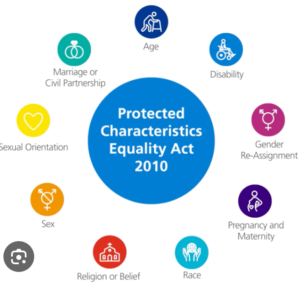
The elitist approach demonstrates itself through various methods. The definition of “leadership potential” mainly depends on behaviours such as assertiveness along with extroversion and strategic risk-taking which society connects with dominant ethnic groups. The narrow definition of leadership potential works against people who demonstrate beneficial leadership approaches that differ from assertiveness and risk-taking. Succession plans commonly use as their talent base senior executives along with participants in formal leadership development programmes while disregarding outstanding performers located in concealed positions and employees from marginalised groups (CIPD, 2022). Silicon Valley tech firms showcase a major example of diversity pledges because their executive succession pools show overwhelming white or Asian males alongsideLayout low numbers of Black or Latinx professionals.
The linear model of succession planning disadvantages candidates who did not follow expected paths toward top positions within an organisation. A deficiency exists in the current system especially when it affects employees who left the workforce to care for family members or those coming from different industries or starting their careers later. The Catalyst research reveals that women experience negative consequences in such systems because maternity leave often prevents them from being selected for leadership positions in multi-national corporations (Ely, Ibarra and Kolb, 2011).
These elitist principles fail to respect essential equality and diversity principles. Organisations devoted to diversity initiatives should understand that leadership capabilities exist within every group population while leadership styles display unique qualities among different people (CIPD, 2024). Using conventional leadership models perpetuates inequality while simultaneously reducing organisational innovation because it decreases thought diversity among top decision-makers.
First, several specific tactical approaches need to be implemented for achieving successful inclusive succession planning reforms. Organisations need to establish a new definition of leadership potential which serves as their first step. Organisations must move away from using their personal feelings and single criteria to assess leadership potential because they should adopt a comprehensive evidence-driven system. The UK Civil Service uses its ‘Success Profiles’ evaluation system to examine candidates through their strengths along with behaviours and experience and technical expertise and organisational values to create broader leadership criteria (Cabinet Office, 2024).
Second, the succession process requires institutional integration of transparency along with accountability principles. The selection of leaders for pipelines requires clear entry requirements together with transparent nomination procedures that receive regular cheques to prevent omitted underrepresented populations (humansmart.com.mx, 2019). The BBC released detailed yearly reports about diversity within its leadership pipeline and made executive compensation directly depend on diversity targets. Executive levels have heightened their awareness as well as their sense of responsibility.
Third, Organisations should make purposeful efforts to develop professionals with diverse backgrounds. Organisations need to develop specialised training programmes together with mentoring services and sponsorship methods that specifically support individuals who come from underserved communities (CIPD, 2022). These initiatives must become part of the main talent development framework rather than creating separate programmes in the organisation. At EY they operate a reverse mentoring system that matches senior executives with junior members from different backgrounds as part of their exclusion learning programme. Through this pairing system leaders gain better comprehension while encountering new talent options.
Fourth, the process of identifying successors in inclusive succession planning requires both multiple evaluation sources and multiple decision-makers according to Verduyn (2024). The influence of unconscious bias gets reduced when standardised assessments combine with appropriate anonymisation of data and diverse decision-making panels as part of the evaluation process. The Lloyds Banking Group conducts assessment evaluations for promotion as well as succession planning through standardised behaviour-based methods which is reviewed by multiple diverse panels to minimise bias.
Finally, building an organisation-wide inclusive culture represents a critical success factor. Succession planning requires executive status within an EDI strategy which must incorporate inclusive recruitment along with fair promotion processes and psychological safety protocols under the supervision of responsible leadership. All employees should possess free access to chances while receiving support to excel in their careers. Succession planning efforts at Microsoft receive support through daily practises through managers who undergo comprehensive training in inclusive leadership and whose performance evaluations include inclusive metrics (Microsoft, 2024).
In summary, traditional succession planning systems tend to mirror elitist principles which deny admission to people who do not satisfy society’s limited definitions of leadership. Organisations dedicated to equality along with diversity and inclusion find existing planning models counterproductive because they fail to support their objectives.
Question 12 (AC3.4)- Assessment of use of online questionnaire surveys as a method of establishing how effectively people management is being carried out in organisations and how satisfied staff are in their roles (Word Count: 1,009 Words)
The online questionnaire survey represents a widespread procedure for employee feedback acquisition especially regarding people management practises and job satisfaction (CIPD, 2023). Such surveys provide organisations with a data-driven option to evaluate organisational culture and management effectiveness as well as employee morale because of their convenience and scalability. Online surveys provide several unique benefits but their capabilities to achieve depth as well as secure proper participant engagement and……
Please click the following icon to access this project in full